
Bondi beach terror case: Sajid Akram’s family in India is unaware of the alleged radical mindset, say officials
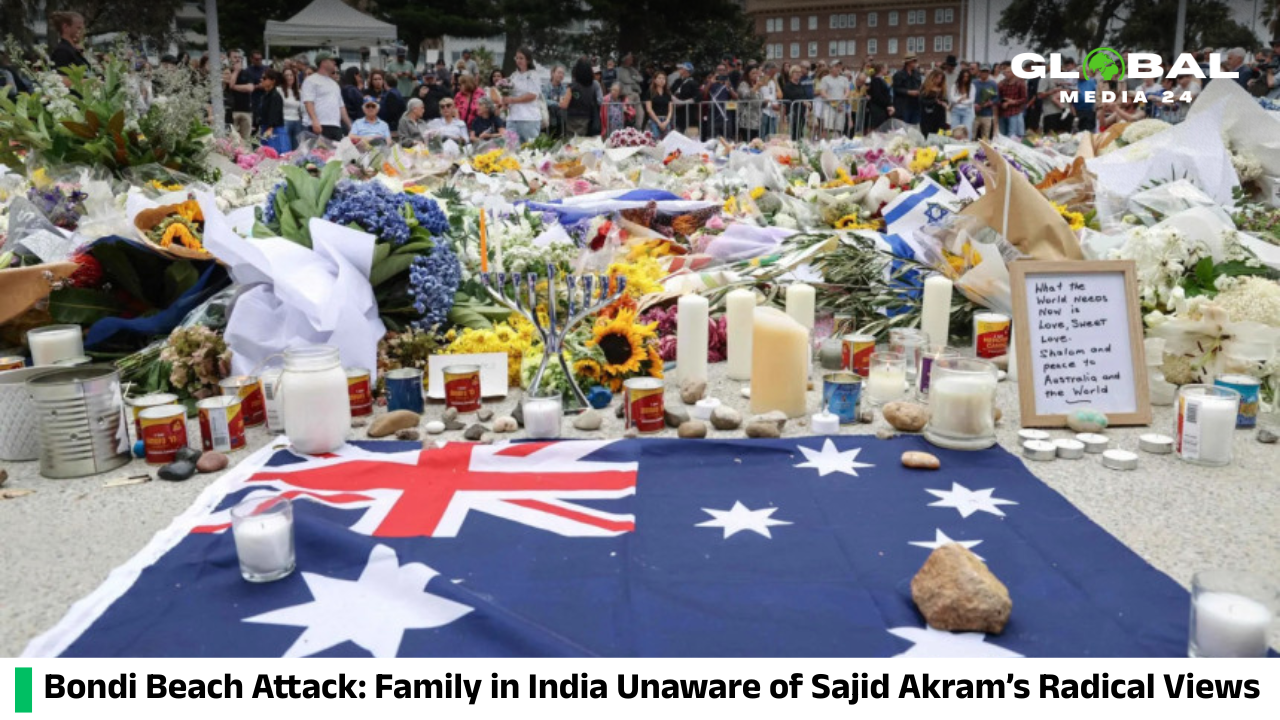
Initial funerals for the victims of Sunday’s mass shooting were held Wednesday, while authorities continue to search for the suspected attackers.
The alleged gunman who was shot dead by police during the attack on Australia’s Bondi Beach on Sunday was originally from the southern Indian city of Hyderabad, and his family there appeared to be unaware of his alleged “radical mindset,” Indian police said on Tuesday.
Meanwhile, the second alleged gunman, who was hospitalized after being shot by police, has woken up from a coma and could face charges as early as Wednesday. New South Wales Police Commissioner Mal Lanyon said 24-year-old Naveed Akram woke up on Tuesday afternoon.
“We have taken custody of him while he is in hospital. Our investigators have had to wait for the medication to wear off and for him to get legal advice,” Lanyon told ABC radio on Wednesday morning.
“We expect to speak to him today.” The Prime Minister, Anthony Albanese, said he expected Naveed to be charged “within the next few hours.”
The attack on the Hanukkah event, which killed 15 people, was Australia’s worst mass shooting in nearly 30 years and is being investigated as an act of terrorism targeting the Jewish community.
The first funerals of those killed were being held on Wednesday, including those of Rabbi Eli Schlanger and Rabbi Yaakov Levitan. Schlanger worked at the Chabad of Bondi, where the Chanukah by the Sea event was being held on Sunday, and his funeral was to take place at the center, just 1 km from the site of the attack.
Twenty-two people injured in the attack are still being treated in Sydney hospitals, with three in critical condition, five in serious but stable condition, and the rest in stable condition.
Police in the southern Indian state of Telangana, giving further details about one of the accused attackers, said in a statement that 50-year-old Sajid Akram had a degree in commerce in Hyderabad, the state capital known as a tech and pharma hub.
Akram then went to Australia in November 1998 to find work and married a woman of European origin, with whom he had a son and a daughter.
The police statement said he had returned to India six times for family reasons, such as property matters and to visit his parents, but did not return after his father’s death.
It said Akram’s family appeared to be unaware of any alleged “radicalization,” and local police had no “adverse record” of him before he left in 1998.
“Family members have not expressed any knowledge of his radicalized mindset or activities, or of the circumstances leading to his radicalization,” the statement said.
“The factors that led to Sajid Akram’s radicalization … do not appear to have any connection to any local influence in India or Telangana.” Australian police said Sajid Akram and his son, Naveed, had travelled to the Philippines last month.
The father travelled on an Indian passport, and the son on an Australian passport, and the purpose of the trip is under investigation, officials said, adding that it was not yet conclusive whether he was affiliated with a terrorist group or had trained in that country.
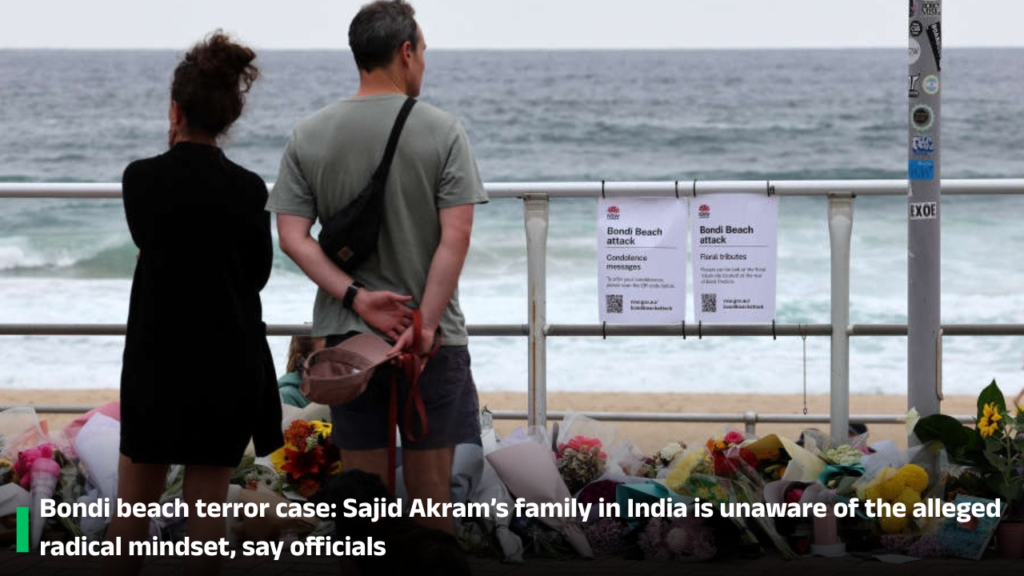
Meanwhile, the grieving parents of the youngest victim of the terror attack said at a memorial service at Bondi Beach on Tuesday evening that they had named her Matilda because she was their first daughter in Australia.
“And I thought Matilda was the most Australian name that could ever exist,” the 10-year-old’s father, Michael, told the crowd.
Michael and his wife, Valentya, who asked that his surname be withheld, emigrated to Australia from Ukraine. They broke down as they addressed the crowd. “I could not imagine that I would lose my daughter here,” Valentina said.
Other victims of the attack included Holocaust survivor Alexander Kleitman, 87; dedicated and much-loved community volunteer Marika Pogani, 82, who died “on her beloved Bondi Beach“; and three people who tried to stop the shooting: Boris Gurman, 69, and wife Sophia Gurman, 61, who were shot dead after trying to disarm an alleged gunman; and Reuven Morrison, who threw bricks at Sajid Akram.
– This report includes contributions from Reuters and Australian Associated Press