Police are probing allegations that Sajid and Naveed Akram underwent overseas training prior to Sunday’s attack.
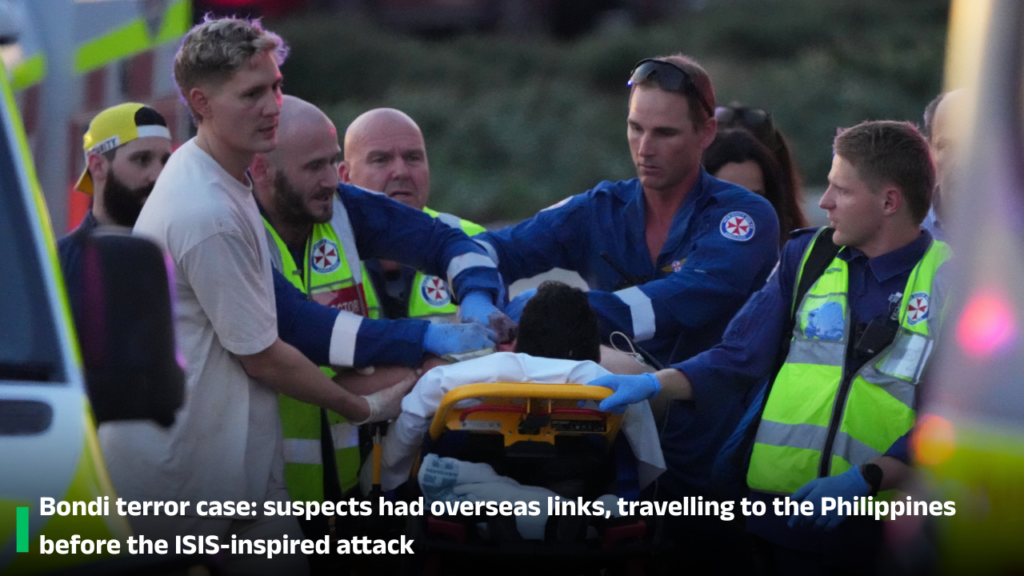
The alleged father-son duo behind the Bondi attack appear to be inspired by the Islamic State, the Australian prime minister said, as police confirmed they were investigating why they travelled to the Philippines last month.
New South Wales Police Commissioner Mal Lanyon alleged on Tuesday that 24-year-old Naveed Akram and his 50-year-old father, Sajid, had recently travelled to the Philippines, a claim confirmed by authorities in Manila.
Lanyon also alleged that an IED and two homemade IS flags were found in a car registered to Naveed that was parked at the site of the Hanukkah festival shooting on Sunday.
“The reasons why they travelled to the Philippines, their purpose, and where they went while they were there are currently being investigated,” Lanyon said.
Anthony Albanese told reporters that “there appears to be evidence that this was [allegedly] inspired by the terrorist organization ISIS.” The pair is alleged to have killed 15 people in the Sydney beach attack—and 25 were still in hospital on Tuesday.
Naved was arrested at the scene and taken to a Sydney hospital with serious injuries. His father was shot dead by police.
Lanyon corrected a report that the elderly man had obtained a gun license a decade ago, saying he was not granted a gun license until 2023.
He said an initial application, lodged in 2015, was cancelled because no photograph was provided for the license. A second application was lodged in 2020 for a category AB license, which was issued in 2023.
The license was issued even though, in October 2019, his son, who was working as a laborer, had come to the attention of the Australian Security Intelligence Organisation (ASIO). Albanese said ASIO had investigated Naveed for six months due to his alleged links to others, and an ABC report claimed the counter-terrorism investigation involved an Islamic State cell.
“It was assessed that there was no ongoing threat or indication of a threat of involvement in violence,” Albanese said on Monday.
Their overseas travel was confirmed by Philippine authorities, who identified Sajid as an Indian national. The Bureau of Immigration said the two arrived in the Philippines on November 1 and listed Davao in the country’s south as their last known address. They departed the country on November 28.
Authorities will now consider whether these events—Sajid obtaining a gun license and purchasing six firearms, and Naveed’s suspected links to potential Islamic extremism in 2019—were threads of intelligence that should have been connected before the attack to provide a clearer picture of any threat posed by the alleged terrorists.
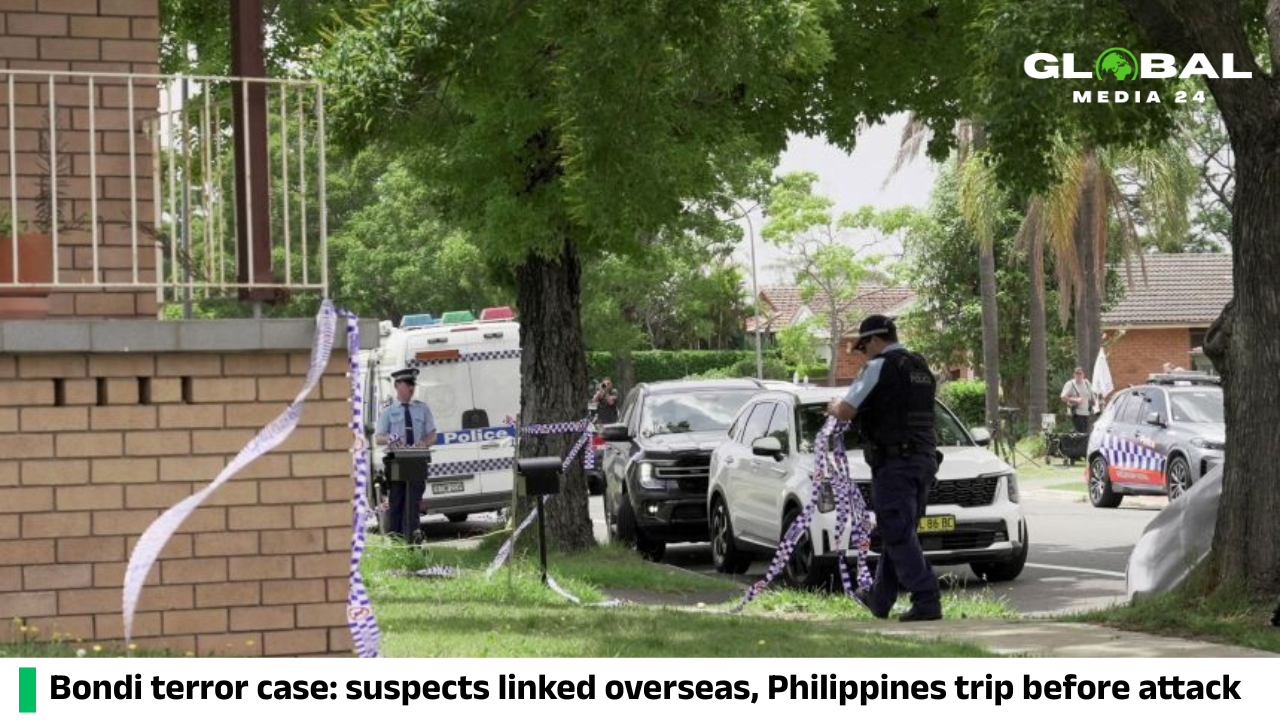
Following the attacks, police seized six firearms belonging to Sajid Akram, who held a gun license. Some of them were found during raids on two properties linked to the couple—one at a Bonnyrigg home and the other at an Airbnb in the suburb of Campsie, where the pair had stayed in the days leading up to the attack.
Lanyon said Sajid Akram “met the eligibility criteria for a firearms license” and held a “recreational hunting license.” Lanyon explained that there are two types of hunting licenses: one that allows hunting on a property or as part of a hunting club—or “gun club”—which was the type of license the suspect possessed.
On Tuesday, Lanyon said Sajid initially applied for a firearms license in 2015, but his application lapsed in 2016 because he failed to provide the necessary photographs. He applied a second time in 2020, and the license was issued in 2023. “The weapons we seized were properly associated with that license,” Lanyon said.