
The warning was issued in response to a question about whether Washington has an alternative plan if US-Iran talks fail or if Tehran declines to reopen the Strait of Hormuz.
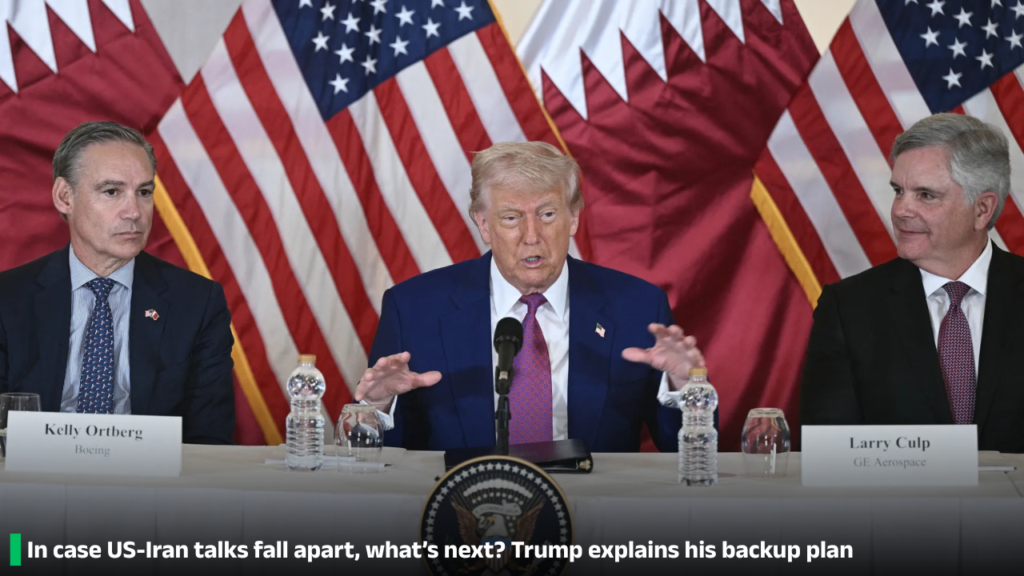
President Donald Trump has stated that the U.S. has no backup plan should negotiations with Iran fail. High-level delegations from both sides are meeting in Islamabad today to discuss ending the conflict in the Middle East.
This warning came in response to a question regarding whether Washington has a “Plan B” ready in the event that U.S.-Iran talks break down or if Tehran refuses to reopen the Strait of Hormuz.
“You don’t need a backup plan. Their military is defeated. We have integrated everything. They have very few missiles. They have very limited manufacturing capabilities. We have struck them very hard. Our military is incredible—the work they have done,” the U.S. president told reporters this morning.
Reports indicate that the U.S. has deployed additional troops to the Middle East, even as a fragile two-week ceasefire offers a rare moment of calm in the Gulf following weeks of intense missile exchanges.
The White House has scheduled the talks in Pakistan to commence on Saturday morning (local time).
In a statement, Pakistan’s Ministry of Foreign Affairs announced that the Iranian delegation—led by Parliament Speaker Mohammad Bagher Ghalibaf and accompanied by Foreign Minister Seyyed Abbas Araghchi—arrived in Islamabad this morning.
The photographs showed Pakistani Minister Ishaq Dar and the army chief—the country’s de facto leader—Asim Munir, welcoming him.
Vice President JD Vance, who appeared to be the most vocal proponent of a war with Iran, is set to lead the US delegation in the negotiations. Before departing Paris, he issued a warning to Tehran not to “play games” with Washington. “If they attempt to play games with us,” he stated, “they will discover that the negotiating team is not particularly receptive.”
Previously, disagreements had arisen between the US and Iran regarding the terms of negotiation; the Trump administration had formulated a 15-point framework stipulating that Iran must surrender its stockpile of highly enriched uranium and accept limitations on its military capabilities.
Iran, in turn, submitted its own 10-point plan, which demanded reparations and called upon the US to recognize Tehran’s sovereignty over the Strait of Hormuz.
Meanwhile, Lebanon and Israel are poised to resume negotiations next week, following a respite from the intense hostilities that had erupted just days earlier—clashes that had threatened to derail the US-Iran talks.