Trump’s angry reaction to his allies declining to join the war highlighted that the global community now expects him to resolve a conflict he initiated without prior consultation.
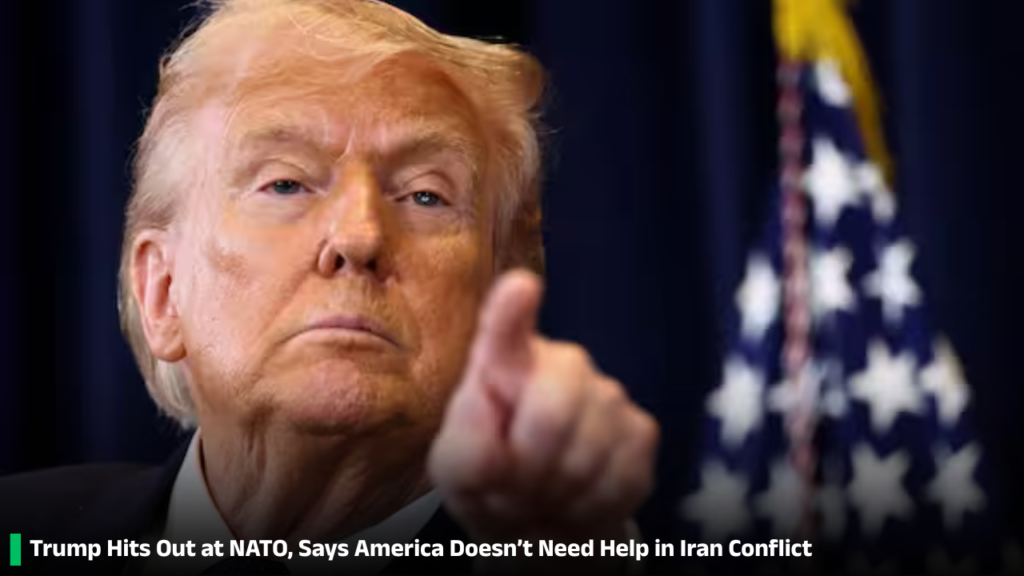
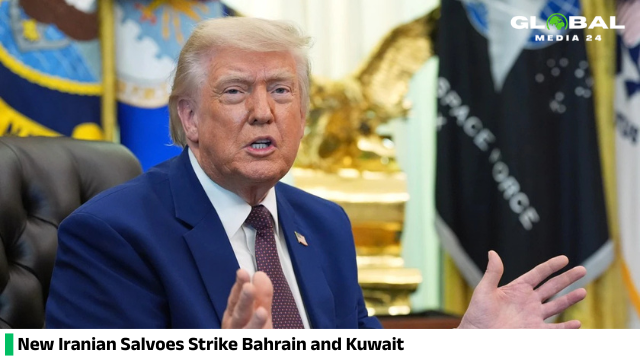
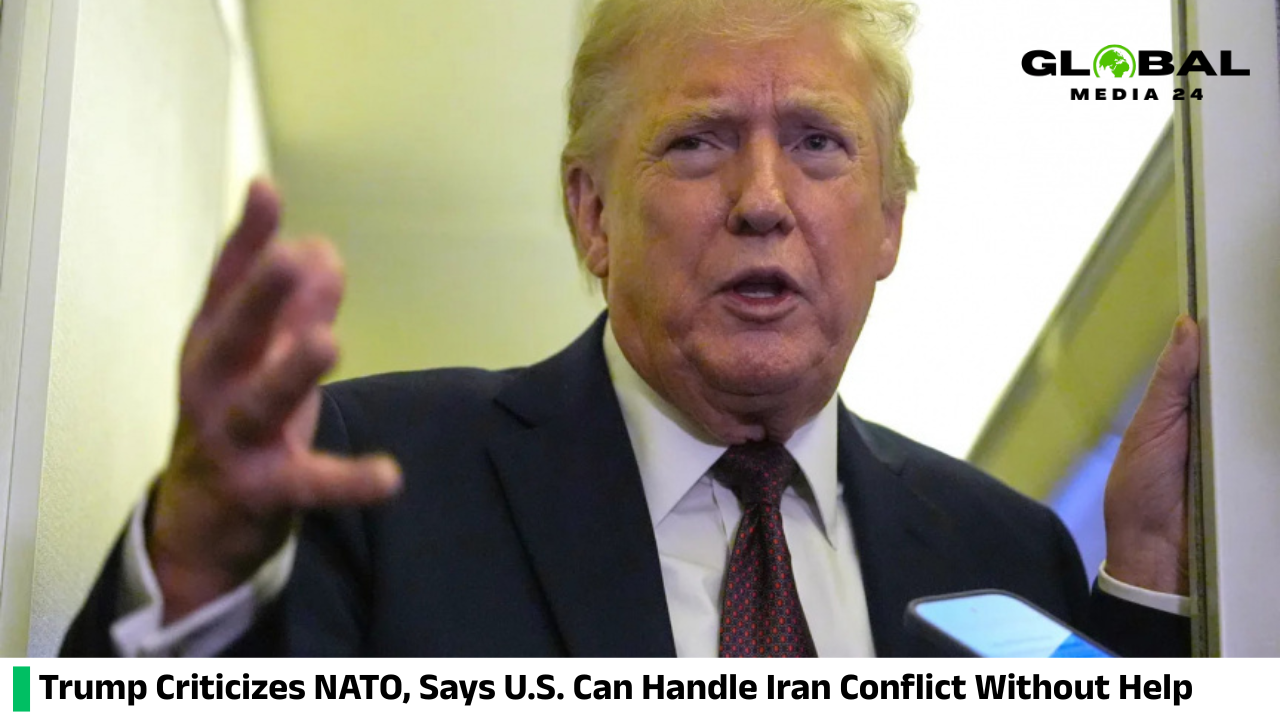
US President Donald Trump stated on Tuesday that NATO and most other allies have declined his appeal to assist in securing the Strait of Hormuz; he expressed frustration that he has been unable to garner support for his preferred confrontation with Iran—a conflict he maintains he is pursuing for the global good, even if the world fails to appreciate his efforts.
Trump, who has been pressuring allies to help safeguard the vital waterways necessary to mitigate disruptions to oil exports from the region, is irked by the lack of support the U.S. is receiving—”despite the fact that we have helped” NATO “a great deal”—and argues that preventing Iran from acquiring nuclear weapons is in his allies’ own interest.
Trump’s irate response to his allies’ refusal to join the conflict made it clear that this confrontation—now in its third week and impacting the global economy—is a battle the international community expects the U.S. leader to resolve largely on his own, given that he initiated it without prior consultation.
“You would have thought they would say, ‘We’d like to send some minesweepers,'” Trump remarked. “It’s not a big deal. It doesn’t cost much money. But they didn’t do that.”
Although he voiced his displeasure with long-standing U.S. allies, Trump insisted that he has no issue with the conflict intensifying—a burden that, for better or worse, will fall predominantly upon his own shoulders.
While Israeli Prime Minister Benjamin Netanyahu had been urging him to pursue this path for months, Trump has consistently maintained that the path of conflict was a choice made by a single individual.
It began based on a “feeling” Trump had regarding the threat posed by Iran, and he has stated that it will end whenever he feels the time is right.
“Frankly, we don’t need any help,” Trump told reporters at the White House while hosting Irish Prime Minister Micheál Martin for St. Patrick’s Day.
Trump complained that NATO allies had expected billions of dollars in aid from the U.S. to help Ukraine defend itself against Russian aggression, yet they were unable to reciprocate by assisting the U.S. and Israel in their efforts to contain Iran—a nation that has posed a threat to countries across the Middle East and beyond for years.
He noted that the U.S. has spent hundreds of billions to bolster the security of Europe and Asia.
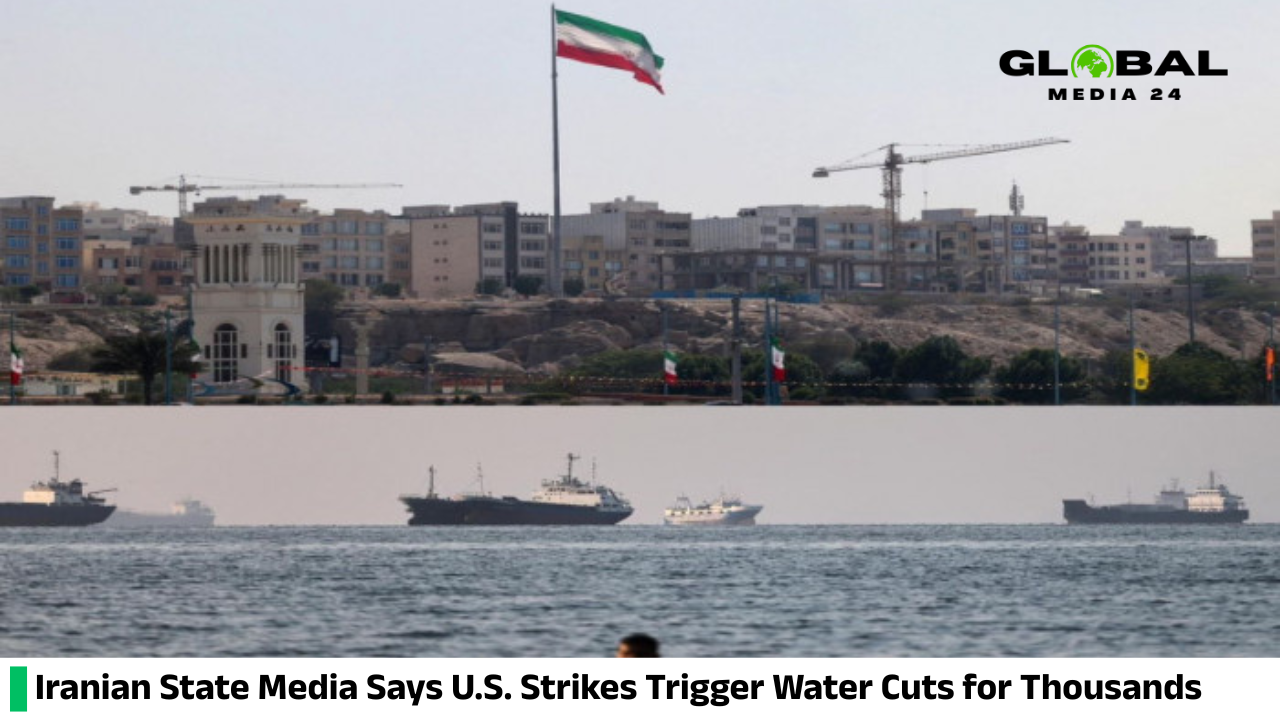
Later on Tuesday, the U.S. military announced that it had dropped several 5,000-pound “deep-penetrator” bombs on hardened Iranian missile sites located along the Iranian coastline near the Strait. According to U.S. Central Command, these sites housed Iranian anti-ship cruise missiles that posed a threat to international shipping within the Strait.
Trump’s relationship with this alliance has been turbulent. The alliance constitutes a critical pillar of the post-World War II national security framework—a framework that Trump believes has become overly reliant on the United States.
Trump has criticized the bloc’s members for contributing too little financially and has even questioned America’s commitment to the mutual defense clause enshrined in NATO’s founding treaty, which stipulates that an attack on one member shall be deemed an attack on all.
NATO functions as a defensive alliance, not an offensive one, and has stated that it has no plans to participate in a U.S.-led conflict with Iran. However, NATO troops were deployed in Afghanistan for 18 years, and their 2011 air campaign helped oust Libya’s late leader, Muammar Gaddafi.
“We will protect them, but they will do nothing for us—especially in times of need,” Trump stated on social media. Trump noted that key allies—Japan, Australia, and South Korea—as well as China, have declined his appeal to assist in securing the strait. This is a vital waterway through which approximately 20 percent of the world’s crude oil typically passes every day.
Asia faces the greatest risk of trade disruption, as it relies heavily on imported fuel—the majority of which is transported through this strait.
Pushing back against Trump, the European Union’s top diplomat asserted that the 27-nation bloc has no desire to be dragged into a U.S.-Israel conflict with Iran and flatly rejected Trump’s demand to dispatch warships to the Strait of Hormuz.
“This is not Europe’s fight. We did not start this fight. We were not consulted,” stated EU Foreign Policy Chief Kaja Kallas on Tuesday. She made these remarks a day after presiding over discussions among member states regarding Trump’s request for naval support.
“We don’t know what the objective of this war is,” Kailas said. “Member nations do not want to be dragged into it.”
Trump described this moment as a “big test” for NATO and stated that the alliance was making a “very foolish mistake” by rejecting him.
A reporter asked Trump whether he was reconsidering America’s relationship with NATO—or perhaps even contemplating withdrawing from the military alliance—in light of the response to the conflict with Iran.
“That is certainly something we should think about,” Trump said. “I don’t need Congress for that decision.” He added, “I don’t have anything in mind right now, but I’m not very happy.”
It remains a matter of debate whether Trump can unilaterally withdraw from NATO. In 2023, Congress passed legislation requiring congressional approval for any withdrawal from the military alliance. Experts have suggested that Trump might attempt to exploit loopholes—perhaps by citing the president’s executive authority over foreign policy—in an effort to circumvent the law.
Trump’s assertion that NATO should now reciprocate America’s long-standing support—given that the U.S. has requested assistance regarding Iran—has met with strong opposition.
French President Emmanuel Macron stated that his country is prepared to assist in securing the Strait of Hormuz, but only as part of a mission distinct from the ongoing conflict in the Middle East.
“We are not involved in this fight,” Macron said; “therefore, France will not participate in any operation to reopen or liberate the Strait of Hormuz.”
Trump dismissed Macron’s remarks. Referring to the French President—whose second five-year term is set to conclude in May 2027—Trump remarked, “Well, he’ll be out of office soon enough.” Trump also stated that he is “disappointed” with British Prime Minister Keir Starmer. The Prime Minister had initially barred U.S. aircraft from utilizing British bases for the strikes against Iran that commenced on Saturday. He subsequently agreed to allow the U.S. to use bases in England and at Diego Garcia in the Indian Ocean to strike Iran’s ballistic missiles and their storage sites but withheld permission for attacks on other targets.
He also took aim at Irish President Catherine Connolly after she described the U.S. and Israeli operations as a “deliberate assault on international law.” Speaking of Connolly, Trump remarked, “Look, she is lucky that I am here. ” Connolly is a woman.
Nevertheless, even though Trump may have determined that the U.S. no longer requires external military assistance to secure the Strait, the State Department has reached out to numerous nations, seeking their support in isolating Iran by designating the Islamic Revolutionary Guard Corps (IRGC) and Hezbollah as terrorist organizations. These actions would result in sanctions being imposed on those groups and their members.
In a cable sent to all U.S. diplomatic missions on Monday, American diplomats stationed in countries that have not yet issued such designations were urged to expedite the process, noting that over the past two weeks, Iran has launched military operations against the U.S. and Israel—actions that are currently being met with large-scale retaliation.
“The time has come for other nations to take concrete action against Iran, including designating the Islamic Revolutionary Guard Corps (IRGC) and its proxy, Hezbollah, as terrorist organizations,” stated the cable, a copy of which was obtained by the Associated Press.