Donald Trump warned that NATO could face a very difficult future if U.S. allies do not assist in reopening the Strait of Hormuz, a key oil shipping route that Iran has effectively blocked during the Middle East conflict.
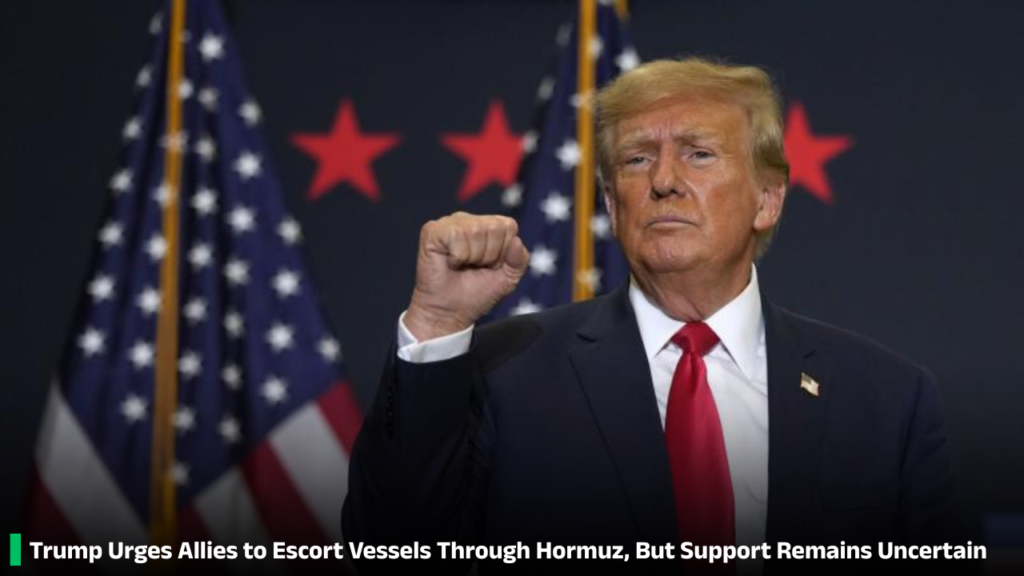
Reports suggest that the United States plans to announce a “coalition” of several nations early this week to assist in protecting ships navigating the war-torn Strait of Hormuz. This announcement comes amidst rising oil prices, driven by the conflict between the U.S. and Israel on one side and Iran on the other.
U.S. President Donald Trump has stated that he has requested approximately seven nations to dispatch warships to help keep these strategic waterways “open and safe”; however, his appeal has yet to elicit any firm commitments.
Citing U.S. officials, The Wall Street Journal reported that discussions are still ongoing regarding when U.S.-led naval operations in the Gulf waters will commence—specifically, whether this will occur before or after the conclusion of the conflict in the Middle East, which erupted following U.S.-Israeli strikes against Iran on February 28 and Tehran’s subsequent retaliatory actions.
The White House did not immediately issue a statement regarding this matter.
Last week, Trump asserted that the U.S. Navy would “soon” begin escorting oil tankers and claimed that Iran was seeking negotiations; however, Iranian Deputy Foreign Minister Abbas Araqchi refuted this claim.
Speaking on CBS’s Face the Nation, Araqchi stated, “We have never requested a ceasefire, nor have we ever sought negotiations.” He added, “We are prepared to defend ourselves, however long it takes.”
Trump’s Warning to NATO Allies
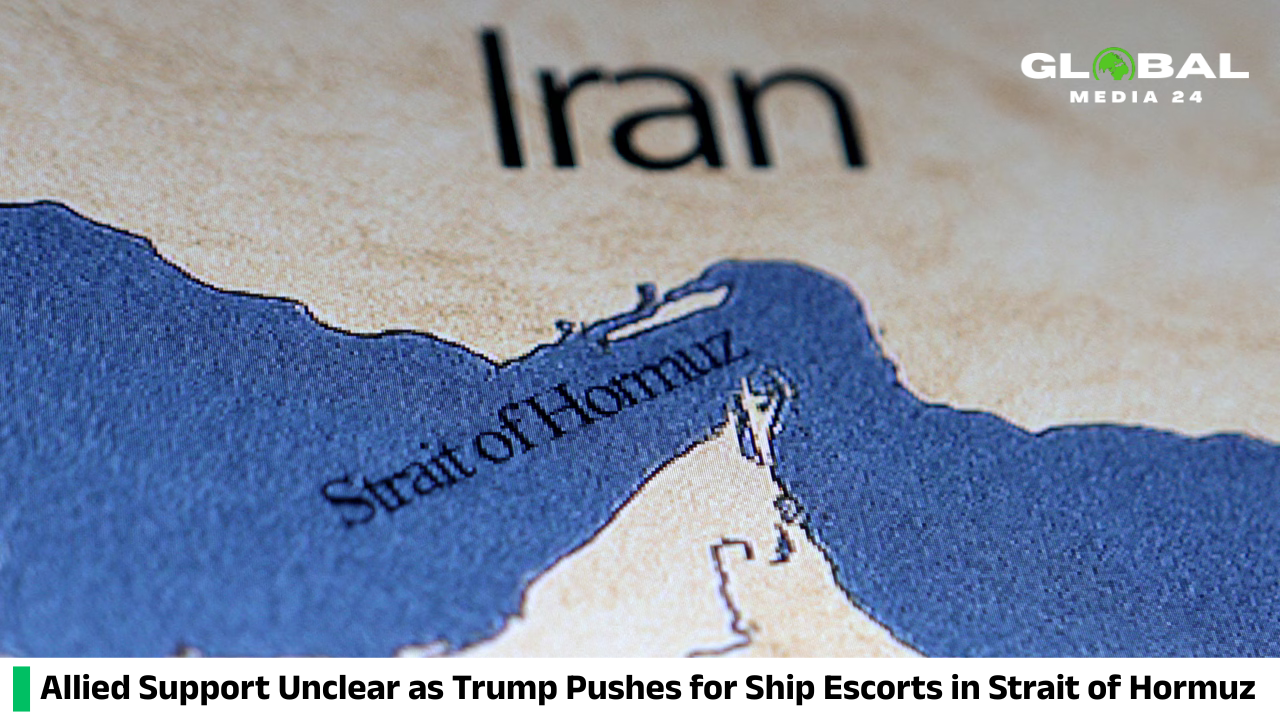
Trump has warned that if U.S. allies fail to assist in keeping the Strait of Hormuz open, the future of NATO could be “very bleak.” The Strait of Hormuz is a vital oil transport route that Iran has effectively closed off amidst the ongoing conflict in the Middle East.
Speaking to the Financial Times, Trump remarked that just as the United States has aided Ukraine in its conflict with Russia, he expects Europe to provide assistance regarding the Strait of Hormuz—a waterway through which 20 percent of the world’s oil passes.
“If no response is forthcoming, or if the response is negative, I believe it would be very detrimental to the future of NATO,” Trump stated. Over the past several years, Trump has been critical of the alliance, arguing that it relies gratuitously on U.S. generosity.
Trump’s Appeal to China
Trump also indicated that his upcoming summit in Beijing with his Chinese counterpart, Xi Jinping, might be delayed, as he is seeking Beijing’s assistance in keeping the strait open.
“We would like to know before the summit,” Trump said, noting that China—along with several European nations—is far more dependent than the United States on oil flowing from the Gulf.
“It is only right that those who benefit from the strait help ensure that no harm befalls it,” Trump asserted.
U.S. in Talks with Seven Nations
Furthermore, speaking to reporters aboard Air Force One, Trump revealed that the United States is in discussions with approximately “seven” nations to assist in keeping the Strait of Hormuz open.
“I am demanding that these nations step up and protect their own region, for it is their region,” Trump told reporters. He did not identify the specific governments his administration has contacted.
The U.S. leader expressed hope that several nations would dispatch warships to help facilitate shipping through the Strait of Hormuz.
In a subsequent social media post, he added that he hopes China, France, Japan, South Korea, the United Kingdom, and other nations will also participate in this effort.
Muted Response to Trump’s Campaign
So far, no U.S. ally has pledged to send troops to support Trump’s campaign. In fact, Australia and Japan have stated that, despite Trump’s request, they will not deploy their vessels to the Strait.
Claims Regarding a US-Iran War
Addressing economic uncertainty surrounding high oil prices, U.S. officials told the news agency Reuters that a war with Iran would “be over in a few weeks,” after which energy costs would decline; conversely, Iran maintains that it remains “stable and strong” and is prepared to defend itself.
Over the weekend, Trump threatened further attacks on Iran’s primary oil export hub, Kharg Island, and declared that he is unwilling to reach a deal to end the conflict—a situation that has effectively closed the vital Strait of Hormuz.
Crude oil prices are hovering around $100 per barrel, even as officials within the Trump administration assert that all indications point toward a swift conclusion to the fighting.
U.S. Energy Secretary Chris Wright stated on ABC’s program “This Week”: “This conflict will certainly be over within the next few weeks—perhaps even sooner… and following that, we will see an improvement in supply and a decline in prices.”