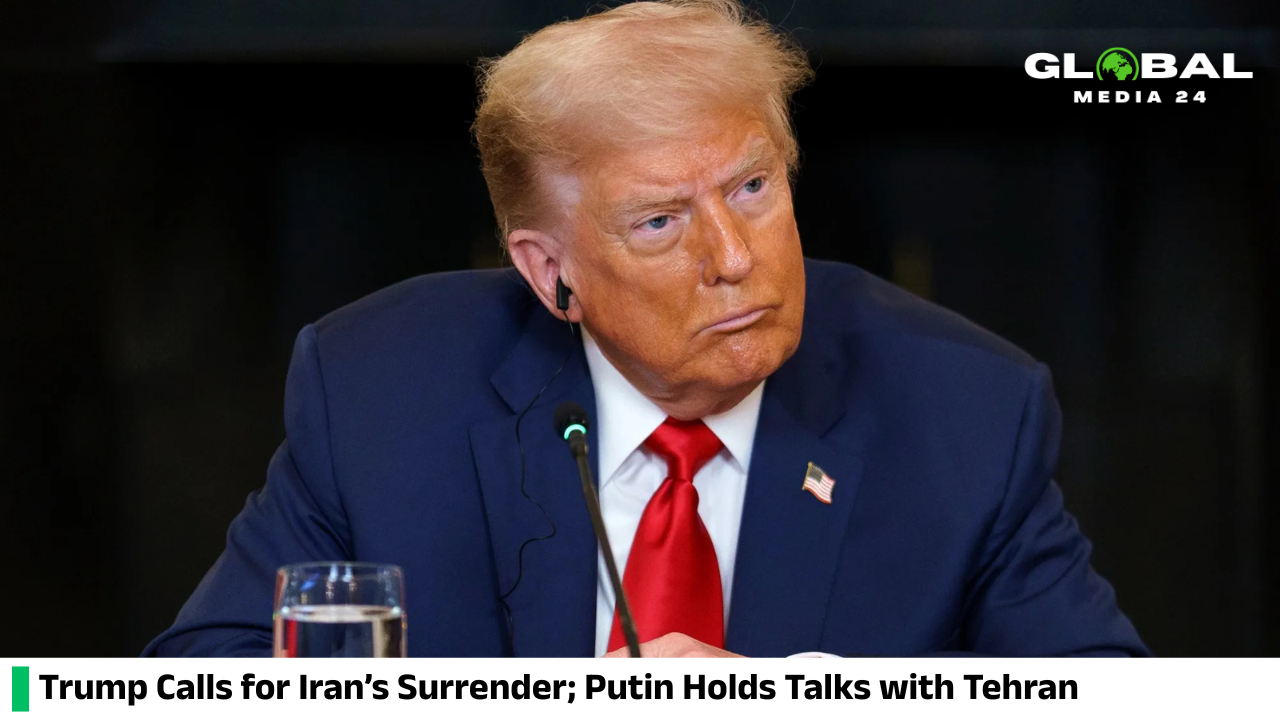
US President Donald Trump called on Iran to surrender unconditionally while American and Israeli forces continued carrying out military strikes.
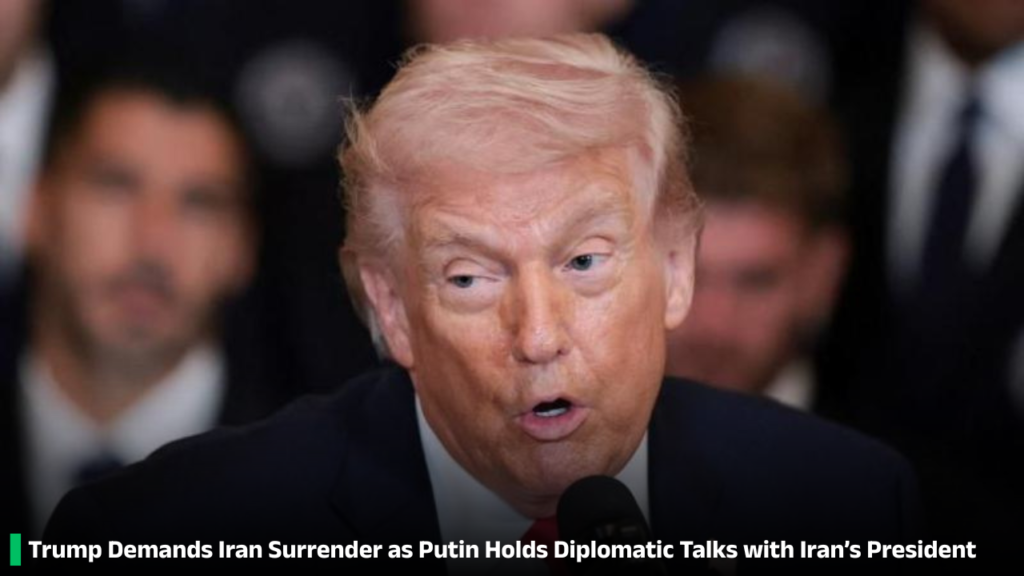
Trump said that after Iran elects “acceptable” new leadership, the US and its allies will make Iran “economically bigger, better, and stronger than ever before.”
With the war nearing its second week, it remains unclear who will lead Iran following the assassination of Supreme Leader Ali Khamenei a week ago or under what terms the US will end its offensive against Tehran, which has triggered retaliatory strikes across the region.
On Friday, White House spokesperson Caroline Levitt said the administration expects military operations to last four to six weeks.
Writing on his Truthout social platform, Trump said, “There will be no deal with Iran except unconditional surrender!
“After that, and after the election of a great and acceptable leader(s), we and our many brilliant and very brave allies and partners will work tirelessly to bring Iran back from the brink of ruin and make it economically bigger, better, and stronger than ever before.”
“Iran will have a great future. Make Iran great again (MIGA!)”
Trump’s new intervention suggests he has no interest in a negotiated solution to the war, although he declined to call for regime change.
Trump has avoided using the term “regime change” since the fighting began. This indicates he may be wary of drawing comparisons between an attack on Iran and previous US wars in the Middle East, which he criticized before entering politics.
Other senior administration officials have echoed Trump’s argument in recent days, saying the president will not allow the US to become embroiled in a prolonged, open-ended conflict like those in Iraq and Afghanistan.
When asked about the timing of the attack, Levitt told reporters: “We expect [the war] to last about 4 to 6 weeks, and we are on track to achieve those goals by destroying Iran’s navy.”
He also said that Trump does not want Iran to be led by “a radical terrorist or a regime that cries death to America.”
The White House press secretary told reporters, “[Trump] wants to be interested and wants to know who the next leader of the Iranian nation will be. And that remains to be seen; the president is discussing it.”
Earlier this week, Trump told US outlet Axios that he hopes to play a role in the selection of Iran’s next leader.
Regarding reports that Khamenei’s son, Mojtaba, a conservative close to Iran’s powerful Islamic Revolutionary Guard Corps military wing, could be named leader, Trump said this would be “not acceptable.”
Trump compared the situation in Iran to the US invasion of Venezuela earlier this year, in which the country’s leader was removed from power and his successor was openly supported.
In January, the president ordered troops to capture Nicolas Maduro in a surprise operation, and the administration supported his deputy, Delcy Rodriguez. The two countries resumed diplomatic relations on Thursday.
On the other hand, three sources, including a senior US official with direct knowledge of the matter, told CBS News that Russia had provided intelligence to Iran about the US position.
Officials said the targeting information included the locations of US warships and aircraft in the Middle East.
When asked about the report, Levitt said it “makes no difference.”
Russia has long been an ally of Iran. Tehran has supplied Moscow with thousands of Shahed drones, which will be used by Russian troops, over the past four years since President Vladimir Putin launched a massive invasion of neighboring Ukraine.
During that time, the US provided Ukraine with weapons and—most importantly—intelligence, which helped Ukrainian troops attack the Russians.
Putin’s office said on Friday that he spoke by phone with Iranian President Masoud Pezeshkian and expressed his condolences for the deaths of Iran’s Supreme Leader, other government officials, and civilians across the country in the US-Israeli attacks.
The Kremlin said Putin reiterated Russia’s position that hostilities must end immediately and a diplomatic solution must be found.
The statement said that Pezeshkian thanked Russia for its support and provided a detailed report on developments in Iran. Iran and Russia agreed to maintain communication with each other.
On Friday, Kremlin spokesman Dmitry Peskov said Russia was in talks with the Iranian leadership but declined to say whether the two countries would continue military cooperation.
Asked about claims that Russia was helping Iran, US Defense Secretary Pete Hegseth said in an interview with CBS’s 60 Minutes program that Trump “knows very well who is talking to whom.”
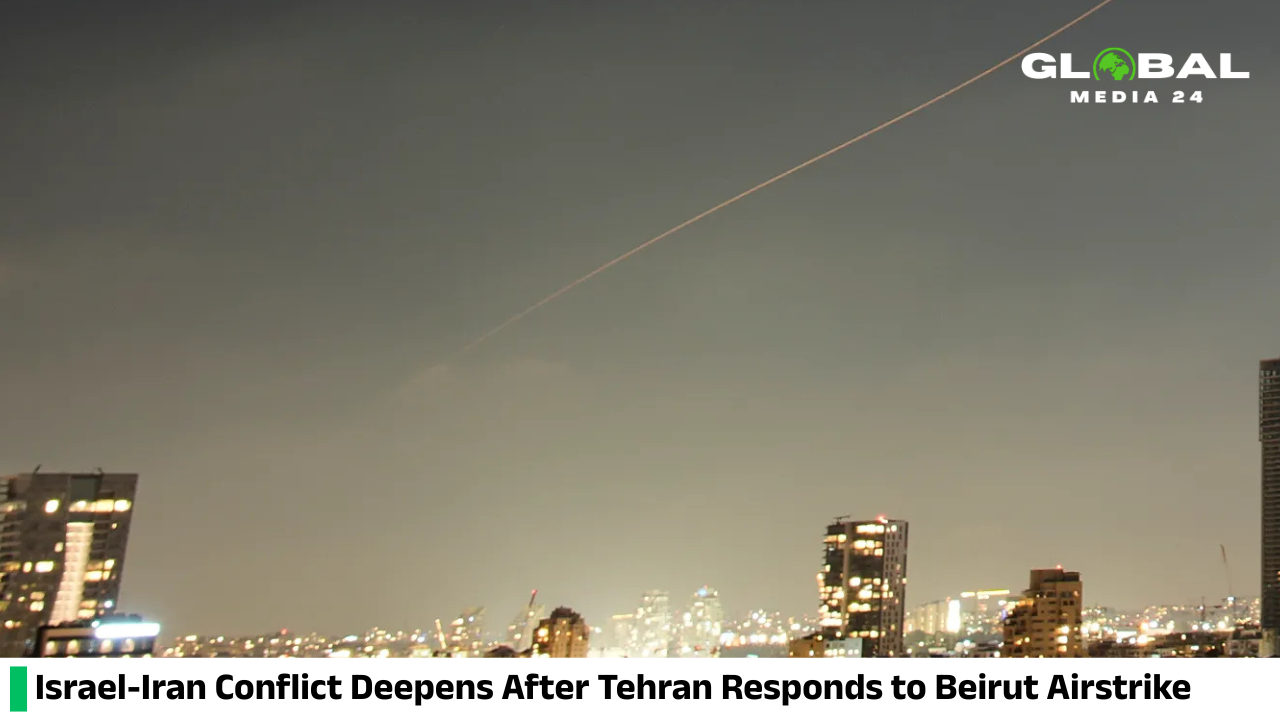
As the war enters its second week, it has spread across the Middle East after Iran-backed Hezbollah launched attacks on Israel, followed by Israeli government attacks on Lebanon on Monday.
Large explosions were seen in the Lebanese capital, Beirut, on Friday. Before the attacks, the Israeli military had ordered hundreds of thousands of people to evacuate the southern part of the city.
Hezbollah has also warned Israelis living within 5 km (three miles) of the Lebanese border to leave their homes.
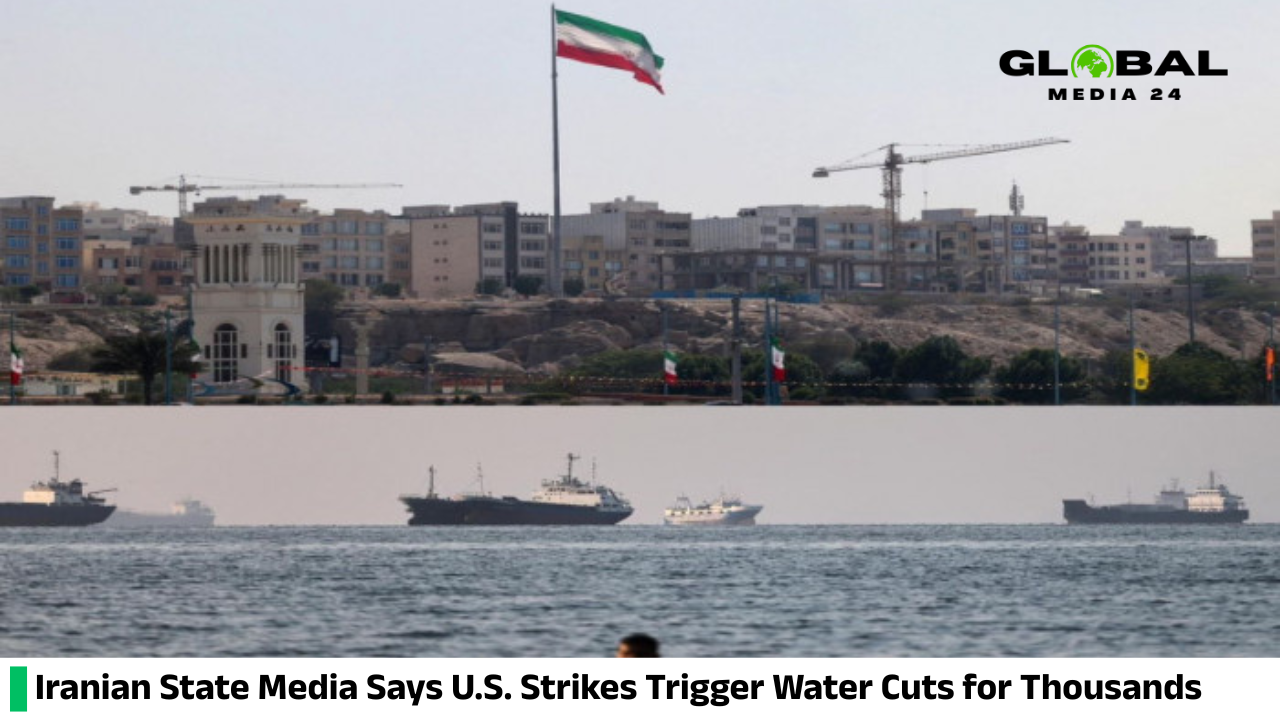
In response to the US-Israeli attacks, Iran has also carried out drone and missile attacks on countries such as Qatar, Bahrain, Jordan, the UAE, and Kuwait—and US allies Oman and Saudi Arabia.
On the other hand, a British military base in Cyprus was attacked by drones on Sunday, according to the UK Ministry of Defense.