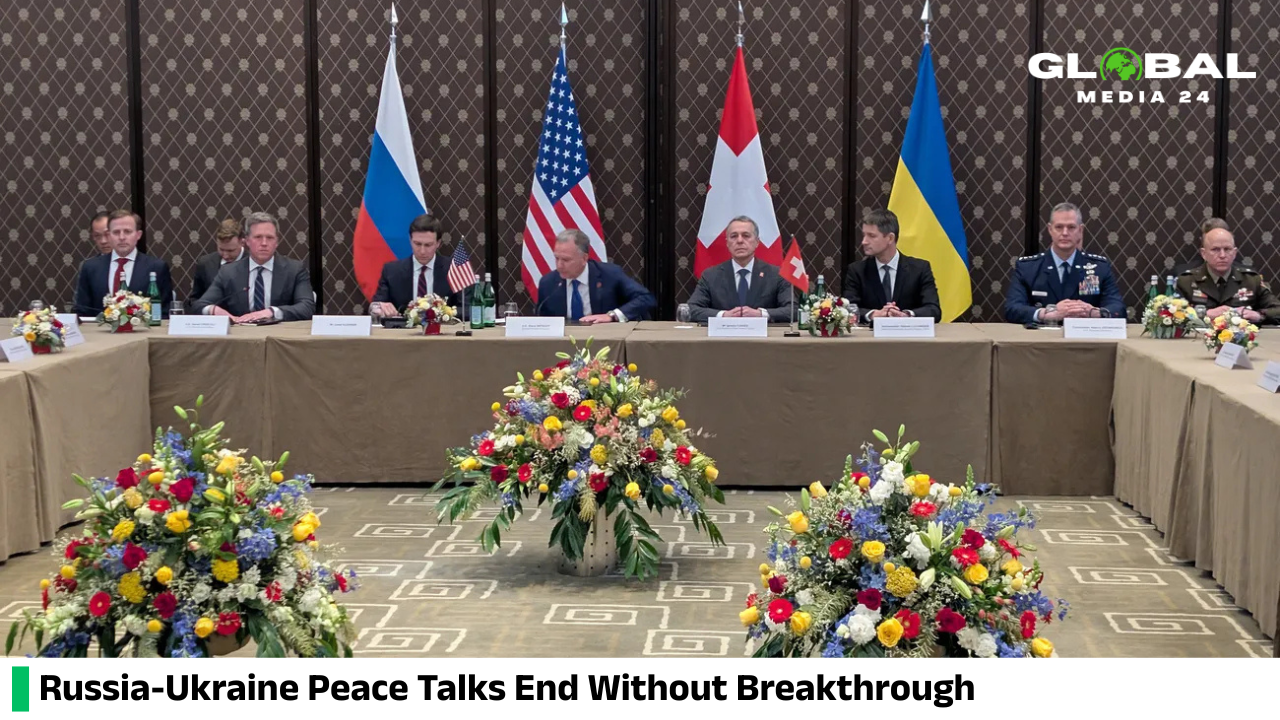
Discussions involving Russia, Ukraine, and the United States to bring an end to Moscow’s war in Ukraine have ended without any major progress.
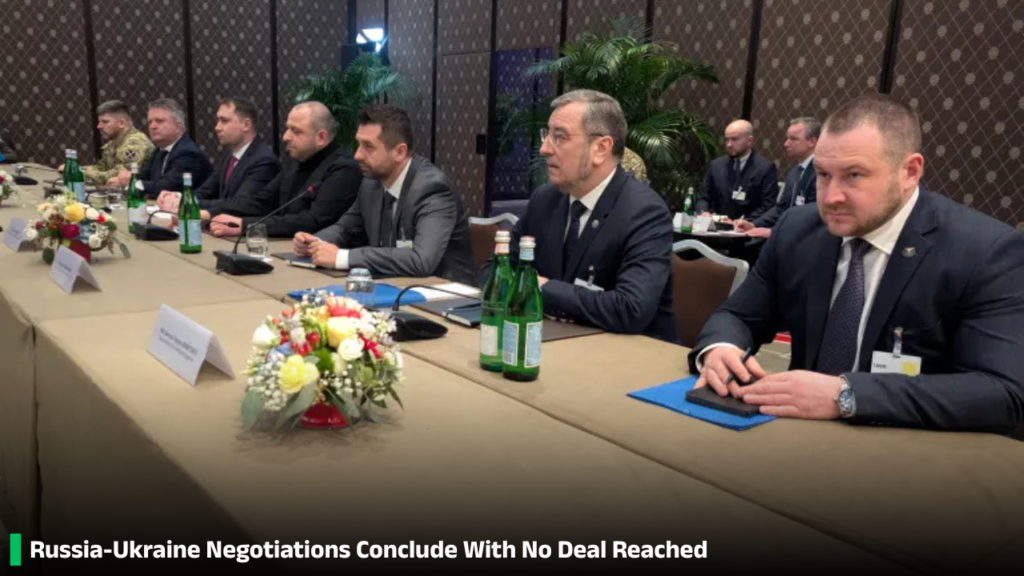
Three-way meetings in Geneva stretched late into Tuesday night but lasted only two hours on Wednesday.
While US Ambassador Steve Witkoff expressed optimism about the talks, both Russia’s chief negotiator and Ukraine’s Volodymyr Zelenskyy said the negotiations were “difficult.”
After the main talks concluded, Kremlin negotiator Vladimir Medinsky returned to the venue and held a closed-door meeting with the Ukrainian side for about an hour and a half. No details of that meeting have been released.
According to a Ukrainian diplomatic source, some progress has been made on “military matters,” including front-line locations and ceasefire monitoring.
White House spokesperson Caroline Levitt said later on Wednesday that both sides had made “substantial progress” and agreed to “continue working together toward a peace deal.”
But agreement on the territorial issue—without which a ceasefire cannot be expected—remains difficult, as Moscow and Kyiv remain deeply divided. Russia remains adamant on its demand for full control of the eastern Donbas region, including the Donetsk and Luhansk regions, which is not acceptable to Ukraine.
Kremlin negotiator Vladimir Medinsky acknowledged that the talks were difficult but said they were “businesslike” and that another meeting would be held “soon.”
Zelensky described the talks as “not easy” due to differences in opinion between the two sides.
Rustam Umarov, somewhat sadly, said that the talks had been “very deep and thorough,” and that while progress had been made, no details could be disclosed “at this stage.”
Umarov said, “This is a difficult task that requires coordination between all parties and a lot of time.”
Shortly before announcing the end of the talks, Zelensky accused Russia of “trying to drag out negotiations that could have already reached their final stages.”
Delegations from Russia and Ukraine last met in early February in Abu Dhabi during US-brokered talks, leading to the first prisoner exchange in several months. On Wednesday, Zelensky hinted that another swap could occur.
US President Donald Trump, who led diplomatic efforts to end the war, has grown impatient with the deadlock between the two sides.
On Monday, he said Ukraine should “quickly come to the negotiating table”—a statement Zelensky has since rejected, saying it was “not right” to ask his country to compromise.
Four years after the start of Russia’s large-scale attack on Ukraine, there is still a significant gap between Moscow’s demands and what Kyiv considers a “just peace.”
Kyiv has long rejected Russia’s demand for eastern Donbas, which would mean relinquishing Ukrainian territory, including several heavily fortified cities and a long defensive line in the Donetsk region.
Many Ukrainians believe that relinquishing the territory would increase the risk of another Russian attack on the country. Zelensky himself has compared it to the 1938 Munich Agreement, when European powers allowed Hitler to annex the Czech region of Sudetenland.
On Tuesday, Zelensky told US media outlet Axios that if any plan to cede Donbas were put to a referendum, the Ukrainian people would reject it.
The Ukrainian president is also working to ensure that Kyiv’s Western allies provide strong security guarantees to deter Russia from attacking again.
Another obstacle in the negotiations is the status of the Zaporizhzhia nuclear power plant.
This power plant – Europe’s largest – is on the front line and has been under Russian control since March 2022. Ukraine wants Moscow to return it, and Zelenskyy has previously said that Kyiv could share control of the plant with the Americans – an arrangement Moscow is unlikely to agree to.
Officials from Britain, France, Germany, and Italy were present in Geneva and held talks with Ukrainians during a trilateral meeting.
European representatives had to work hard to join the US-led talks, but Zelenskyy said European participation was “essential” for any final agreement.
In a major interview on Piers Morgan Uncensored on Wednesday, Zelenskyy confirmed that further talks would take place in Switzerland and reiterated that progress had been made from a military perspective, but “it is more difficult from a political perspective.”
During the interview, he also said that he doesn’t really “understand” Trump’s relationship with Russian President Vladimir Putin, saying, “It’s very, very sad to me that his attitude toward Putin is sometimes… nicer than Putin deserves.”
Next Tuesday will be the fourth anniversary of Moscow’s massive invasion of Ukraine.
This war has left thousands of military and civilians dead in Ukraine and millions displaced. The war is impacting the lives of Ukrainians, with deadly airstrikes occurring daily across the country.
On Tuesday night, Russian artillery and airstrikes killed four people and injured 30. Power infrastructure across the country is also being targeted, leaving millions without electricity or heating during Ukraine’s coldest winter in years.