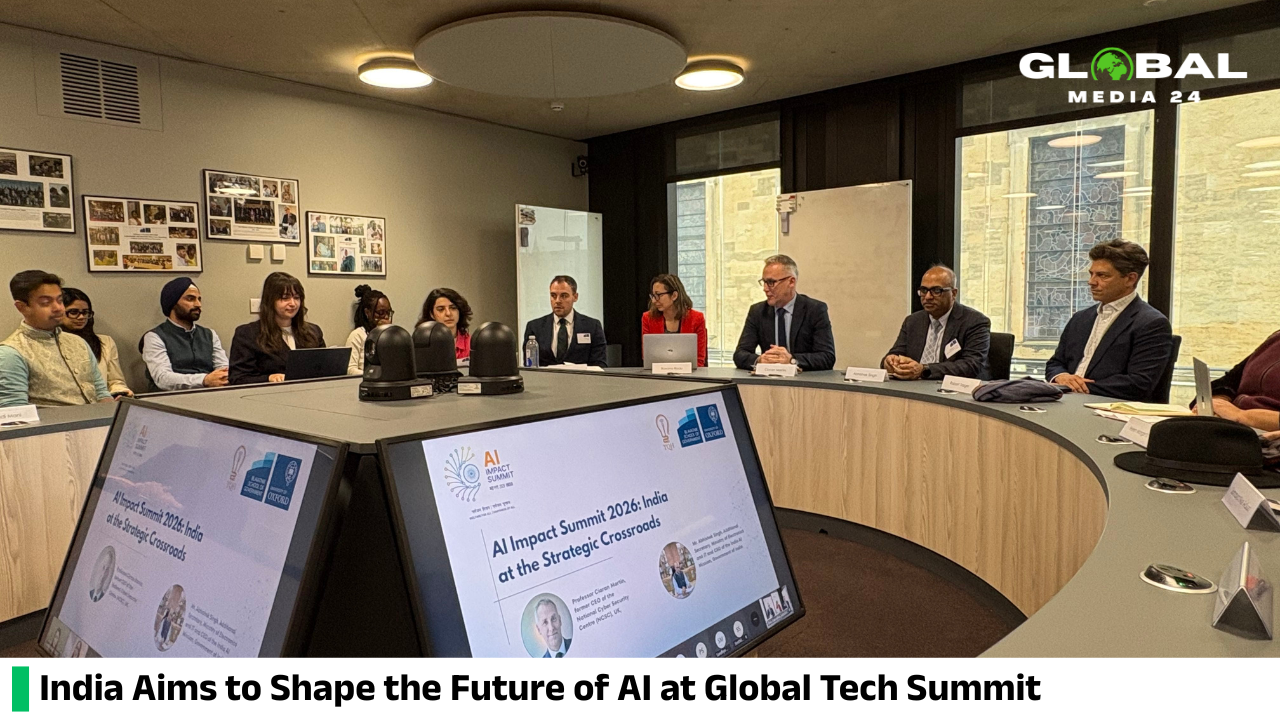
Global heads of state, leading technology executives, AI entrepreneurs, and prominent investors are set to convene in New Delhi for the India AI Impact Summit, which is anticipated to become one of the most significant assemblies of AI visionaries ever organized.
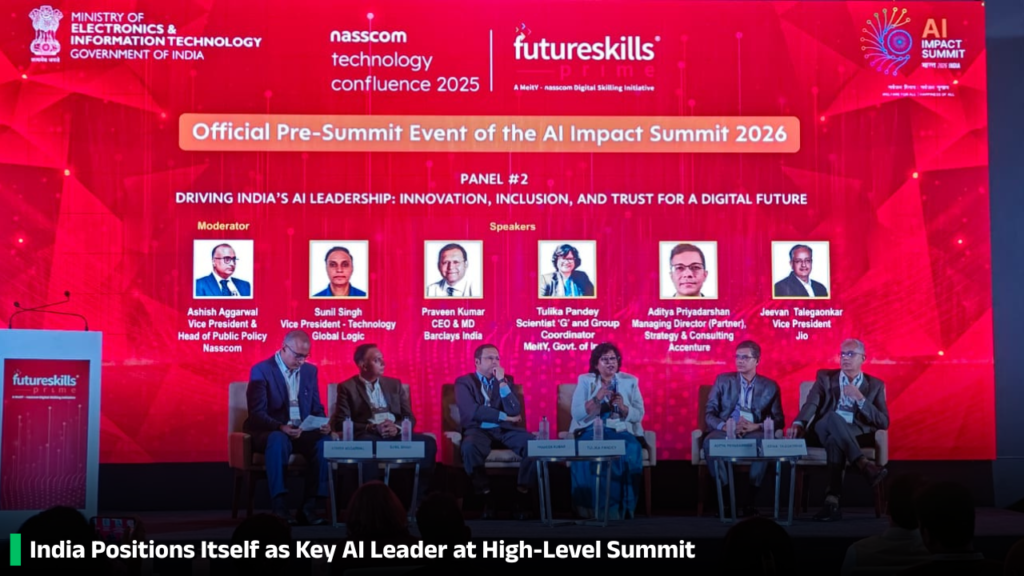
India is launching one of the world’s largest artificial intelligence summits on Monday, with Prime Minister Narendra Modi attempting to pave the way for India in this tight race to build a frontier model.
World leaders, tech giants, AI founders, and investors are expected to descend on New Delhi for the India AI Impact Summit, potentially the largest gathering of AI’s biggest names ever. Sundar Pichai of Alphabet Inc., Sam Altman of OpenAI Inc., Dario Amodei of Anthropic PBC, and Alexander Wang of Meta Platforms Inc. are on the guest list, along with researchers like Yann LeCun and Arthur Mensch.
French President Emmanuel Macron will deliver a keynote on the summit’s final two days—February 19 and 20—followed by PM Modi’s address.
For PM Modi, the summit offers an opportunity to showcase India’s large tech-savvy population and engineering talent, which could swing the next phase of the global AI race in its favor.
The country has a digital infrastructure powered by the data of over one billion citizens, who can be identified through Aadhaar, a biometric ID system.
Despite being a late starter, it has a proven track record of rapidly accelerating technology adoption—it missed the personal computer boom but became a powerhouse of software services, growing from limited landlines to nearly one billion smartphones in less than two decades.
“By overlaying AI on existing digital identity and payment rails, as well as healthcare, education, and governance stacks, India is trying to compress decades of development into years,” said Abhishek Singh, Additional Secretary, Ministry of Electronics and IT. “And what’s built for India won’t just stay in India.”
The country is already exporting its digital identity and payment blueprints.
MOSIP, an open-source platform inspired by Aadhaar’s architecture, is now helping countries like the Philippines, Morocco, and Uganda build national ID systems. Some countries are building digital payment platforms on top of this framework.
According to Stanford University’s Institute for Human-Centered AI, India ranks third globally in AI competitiveness, behind the US and China.
Global tech companies are taking note. OpenAI and Anthropic are launching operations in India, attracting enterprise customers, developers, and government agencies.
Google and Meta are expanding data centers to serve one of the fastest-growing markets for models like ChatGPT, Gemini, and Cloud.
Nvidia Corp., which is facing pressure from the US export ban on high-end chips to China, is looking to India as a counterweight, although its chief withdrew from the summit at the last minute, citing “unforeseen circumstances.”
Still, industry analysts warn that years of underinvestment in technology research and development could hinder India’s AI growth. Akriti Vaish, founder of the AI-focused fund Activate, said that the country’s real success will come from strengthening its research ecosystem so that “we’re not just a testing lab for Silicon Valley algorithms.”
Efforts to create local models are already underway. Systems reflecting India’s linguistic diversity will be unveiled this week, with researchers developing voice-first systems for dozens of Indian languages.
At the summit, government-backed BharatGen, which combines the research strengths of India’s top engineering institutions, will launch Param2, a 17-billion-parameter model supporting 22 Indian languages.
Sarvam AI, backed by Lightspeed Venture Partners and Khosla Ventures, will present an even larger model with a similar voice-first orientation. Both projects aim to bring low-cost AI to large populations and generate more data to help transform sectors ranging from classrooms to clinics and crop fields.
For US companies, growing competition from such local models could further delay profits from AI ventures in India, a conundrum for the Chinese ecosystem.

The focus on affordability is deliberate and could be game-changing. “Our model is designed to accelerate adoption in critical areas like governance, education, healthcare, and agriculture,” said Rishi Bal, BharatGen’s chief executive officer. “In India and most developing countries, cost is not an afterthought.”
Himanshu Tyagi, co-founder of San Francisco-based Sentient AI, backed by Peter Thiel, said India could regain lost ground if it focused on areas like advanced reasoning for science and robotics, because “the next wave of intelligence won’t use data on the internet.”