The Ministry of External Affairs remarked that it was regrettable that Pakistan, rather than earnestly confronting the issues troubling its own society, continues to mislead itself by holding others responsible for problems that are entirely of its own making.
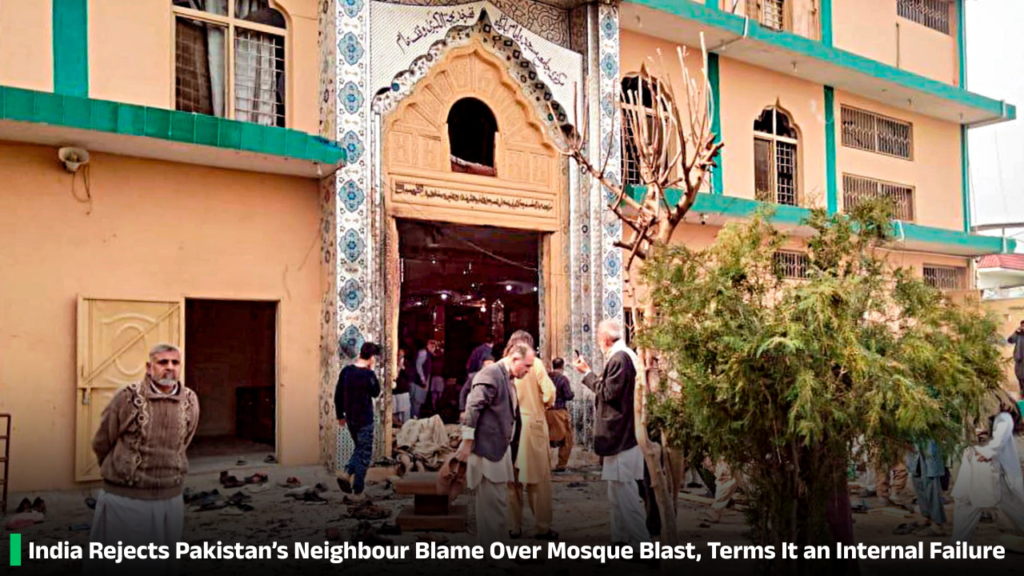
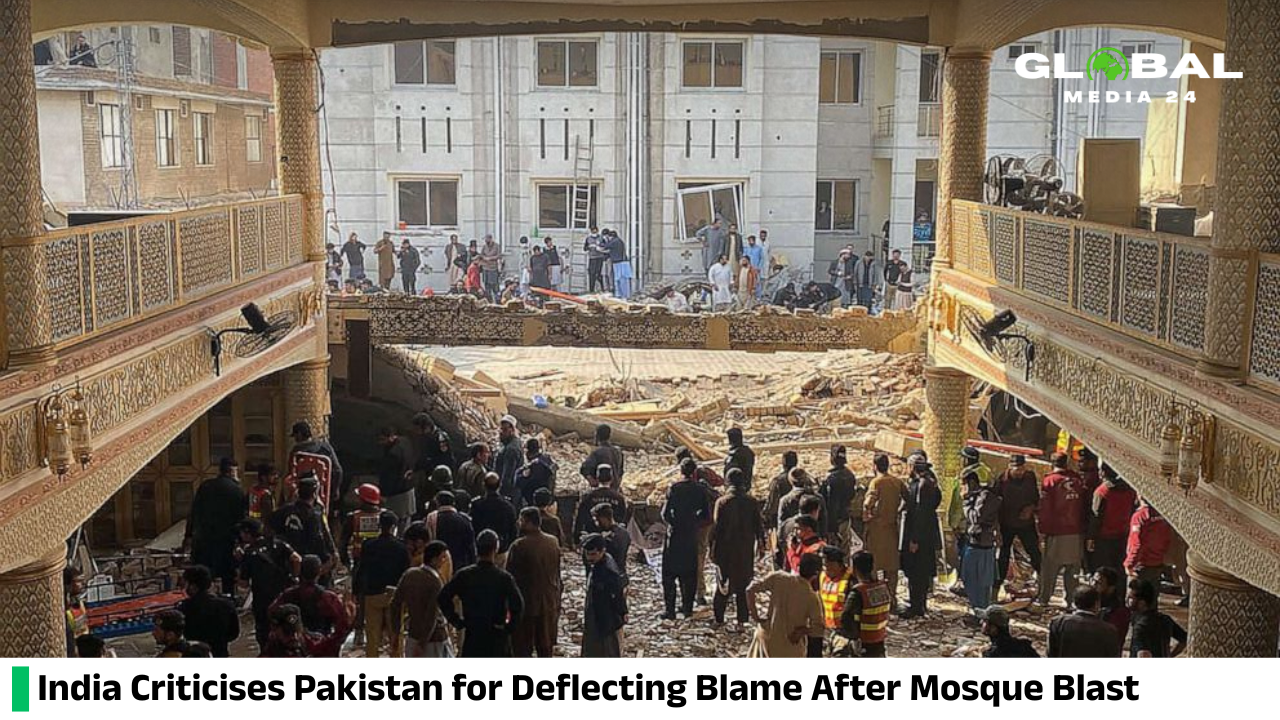
A horrific suicide bombing struck Islamabad on Friday, ripping through a crowded mosque in the capital. The attack killed at least 69 people and injured more than 170, making it one of the deadliest attacks in recent years.
As shock and grief spread across Pakistan, the aftermath quickly devolved into a war of words, with India and Afghanistan rejecting Islamabad’s accusations and instead focusing on Pakistan’s own security failures and internal challenges.
In a strongly worded statement issued from New Delhi, the Ministry of External Affairs condemned the bombing and expressed sorrow over the loss of innocent lives.
However, it categorically rejected any suggestion of Indian involvement, calling such claims “baseless and absurd.”
The statement said, “It is unfortunate that instead of seriously addressing the problems that are tearing apart its social fabric, Pakistan is deluding itself by blaming others for its domestic ills.”
India’s response came after comments from Pakistan’s Defence Minister Khawaja Muhammad Asif, who claimed the bomber had links to Afghanistan and alleged a new nexus between India and the Afghan Taliban.
In a post on X (formerly Twitter), Asif said the bomber had been moving between Afghanistan and Pakistan and accused India of running a proxy campaign after a “shameful defeat,” adding that New Delhi no longer had the courage for a direct confrontation.
These claims were immediately and angrily rejected in Kabul. The Afghan Taliban government, through a statement from the National Defence Ministry spokesperson, condemned the Islamabad attack and accused Pakistani officials of making “irresponsible” and habitual accusations without evidence.
The statement said that Pakistan has repeatedly blamed Afghanistan for attacks in Balochistan and other areas “without conducting necessary investigations and without any verification or corroboration.”
It added that such claims have “no logic or basis” and are intended to divert attention from Pakistan’s own security shortcomings.
The Afghan Ministry of Defense raised pointed questions, asking why, if Pakistani authorities could identify the perpetrators immediately after the attack, they were unable to prevent it in the first place.
“These hasty statements can neither conceal security deficiencies nor resolve the existing problems,” the statement said.
The Taliban government reiterated its commitment to Islamic principles and stated that it does not permit the killing of innocent people for political objectives.
It emphasized that it neither supports nor harbors those responsible for such attacks and urged Pakistani security officials to refrain from shirking responsibility.
Instead, Kabul called on Islamabad to review its policies, improve internal security, and engage in “positive cooperation and constructive engagement” with its neighbors instead of escalating hostilities.
Within Pakistan, the attack has intensified scrutiny of the country’s fragile security situation, particularly in urban areas that were once considered relatively safe.
According to officials, the suicide bomber detonated his explosives inside the mosque after being challenged by security personnel, causing heavy casualties among the worshippers gathered for prayers.
Hospitals in Islamabad remained overwhelmed throughout the night as doctors struggled to treat the injured.
Analysts say the exchange highlights Pakistan’s growing diplomatic isolation on the issue of militancy. “Blaming neighbors has become commonplace, but it no longer carries any weight internationally,” said a regional security expert based in South Asia. Both India and Afghanistan are strongly protesting this, arguing that Pakistan must confront the militant networks and ideological fault lines within its own borders.
As families mourn the dead and the injured fight for their lives, pressure is mounting on the Pakistani government to respond and ensure accountability.
For now, this tragic incident in Islamabad has not only exposed dangerous security vulnerabilities but has also further deepened regional tensions. India and Afghanistan have jointly accused Pakistan of failing to deal with the very forces that are continuously undermining its own social fabric.