António Guterres has called on the two major powers to swiftly conclude a new agreement following the expiration of the New START treaty.
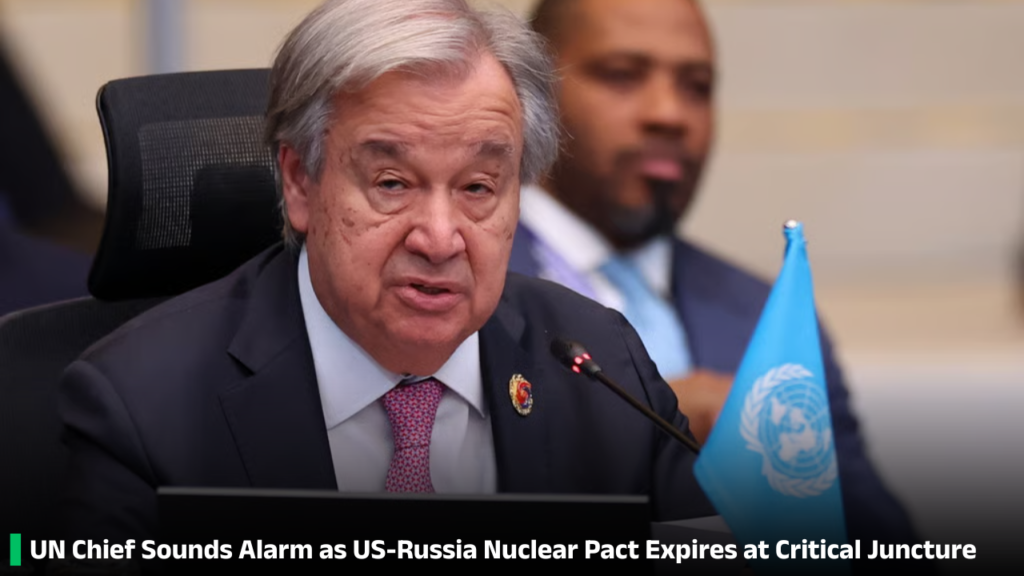
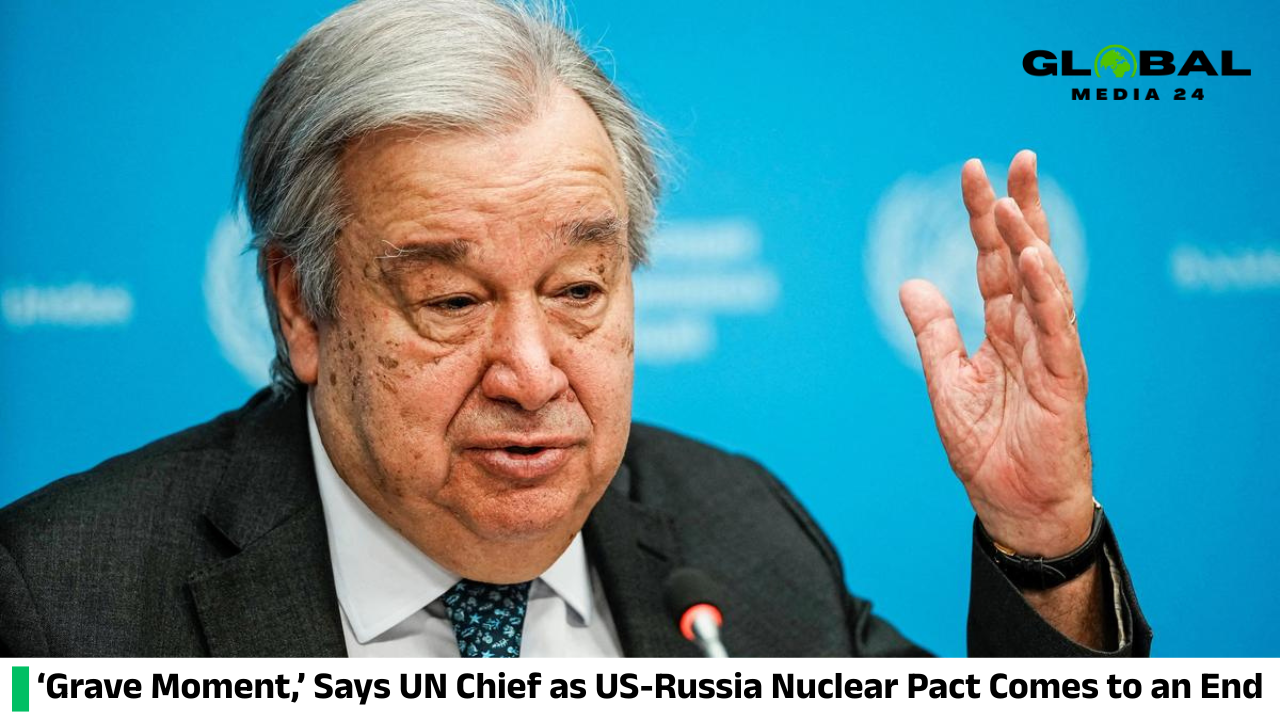
UN Secretary-General António Guterres has urged the US and Russia to sign a new nuclear arms control deal as soon as possible, following the expiration of the existing treaty, which he described as a “grave moment for international peace and security.”
The last remaining nuclear treaty between the two powers, the New START agreement, expired on Thursday, officially freeing both Moscow and Washington from many of the restrictions on their nuclear arsenals and raising fears of a global arms race.
“For the first time in more than half a century, we are facing a world without a legally binding framework to control strategic nuclear weapons… held by the two countries that possess the vast majority of the global nuclear arsenal,” Guterres said in a statement on Wednesday.
He added that New START and other arms control treaties had “significantly enhanced the security of all people.”
“This end to decades of progress could not come at a worse time—the risk of nuclear weapons use is higher than at any time in decades,” he said, following Russia’s suggestions of using tactical nuclear weapons at the start of the war in Ukraine.
Russia and the United States control more than 80% of the world’s nuclear warheads. Guterres appealed to Washington and Moscow to “return to the negotiating table without delay and agree on a successor framework.”
This milestone, coming at a time of growing global instability, is a death knell for arms control that has been in place for more than five decades. And it could jeopardize the 1970 Nuclear Non-Proliferation Treaty (NPT)—which is due for review this year—under which non-nuclear-weapon states pledged not to acquire nuclear weapons as long as nuclear-weapon states made good-faith efforts to eliminate them.
The treaty was signed in Prague in 2010 by then-Presidents Barack Obama and Dmitry Medvedev. It limited both sides’ nuclear arsenals to 1,550 deployed strategic warheads, roughly 30% fewer than the previous limit set in 2002.
Medvedev said the treaty’s expiration should be “a cause for concern for everyone.” Obama wrote on social media that the treaty’s expiration could “trigger another arms race that would make the world less safe.”
After defeating Donald Trump in the 2020 election, Joe Biden agreed to extend New START with Russia for five years, but tensions between the two countries have since escalated over Moscow’s invasion of Ukraine.
Trump has frequently criticized international limits on the US and called for a resumption of nuclear testing after a long hiatus, although he has not acted on this.
But some experts say the demise of New START has less to do with ideology and more to do with the way the Trump administration operated, where career diplomats were sidelined, lacking the ability to negotiate complex agreements. Trump took no action on Russian President Vladimir Putin’s proposal to extend the treaty’s limits for a year. Asked about the proposal in front of his helicopter in October, Trump said it was “a good idea,” but no further discussions followed.
Russia’s Foreign Ministry said Wednesday that it believes both countries are “no longer bound by any obligations or reciprocal declarations in the context of the treaty.”
“The Russian Federation intends to act responsibly and prudently,” it added, but warned that it is prepared to take “decisive” retaliatory measures if its national security is threatened.
Pope Leo XIV said that every side needs to do “everything possible” to prevent a new arms race. “I urge you not to abandon this path until it is certain that it will be pursued in a concrete and effective way,” he said during his weekly general audience.
US Secretary of State Mike Pompeo said Wednesday that Trump would make a decision later and reiterated the call for a new agreement that includes China.
“The president has been very clear that in order to have meaningful arms control in the 21st century, it’s impossible to do that without China being a part of it, given their very large and rapidly growing stockpile,” Pompeo said.
China’s nuclear arsenal is rapidly expanding, with an estimated 550 strategic nuclear launchers, still significantly fewer than the approximately 800 each held by Russia and the United States, which are capped under New START. France and Britain—treaty-bound US allies—together possess another 100.