
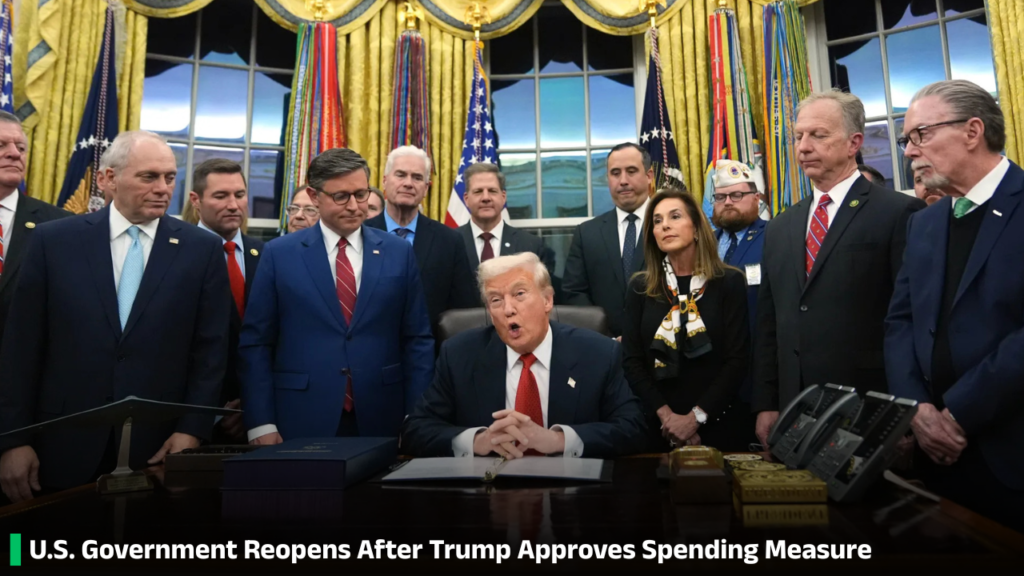
The bill reached President Trump at the White House after narrowly passing the Republican-led House by a 217–214 vote earlier in the day.
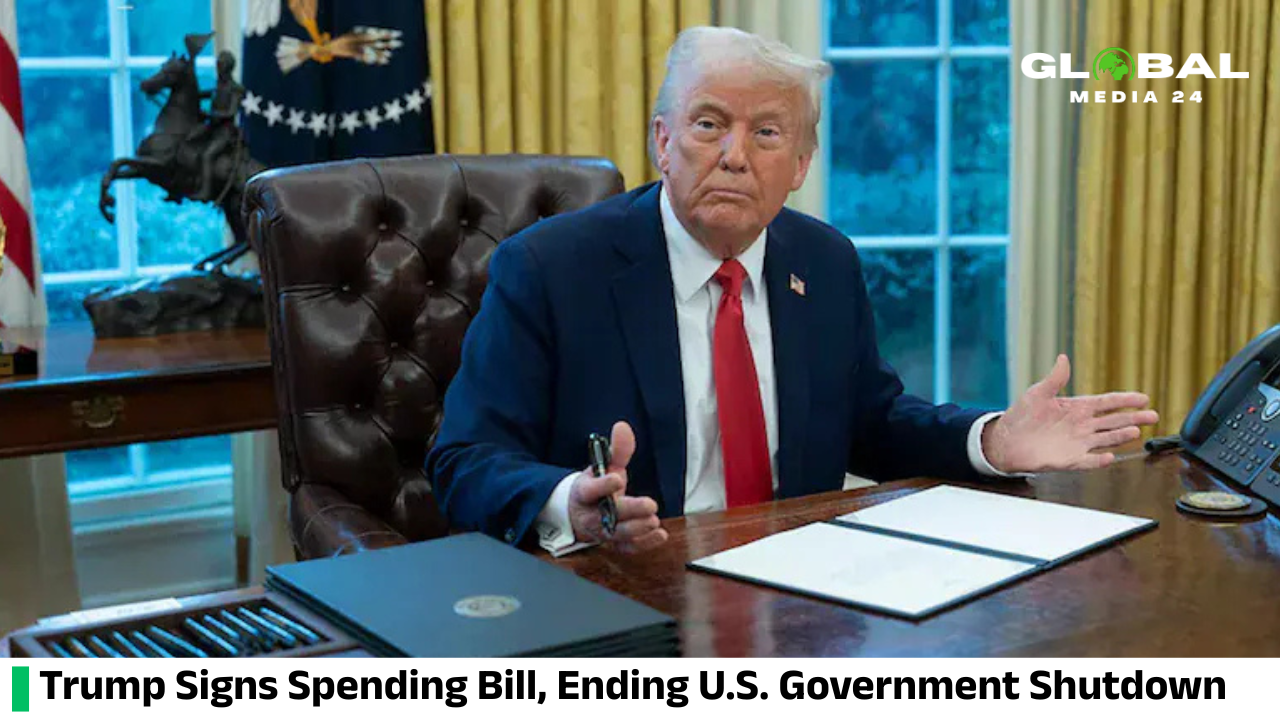
President Donald Trump signed a spending bill on Tuesday, ending a four-day partial government shutdown. The shutdown was triggered by Democratic opposition to funding federal agencies involved in Trump’s stepped-up immigration enforcement.
The bill reached Trump’s desk at the White House after it was narrowly passed earlier in the day by the Republican-controlled House of Representatives, 217-214.
Twenty-one Democrats joined Republicans in voting for the funding package, while an equal number of Republicans opposed it rather than accede to Democratic demands for reforms at the Department of Homeland Security (DHS).
Negotiations over new funding for the DHS broke down after the killing of two American citizens by federal agents in Minneapolis, Minnesota, a city that has become a flashpoint in the Republican president’s immigration crackdown.
On Friday, the Senate passed a package approving five outstanding funding bills to cover most federal agencies through September, along with a two-week stopgap measure to keep the DHS operating while lawmakers negotiated over immigration enforcement policies.
Trump, who presided over a record 43-day government shutdown last summer, had been pressuring Republicans to pass the spending bill and end the shutdown that began on Saturday.
“This bill is a great victory for the American people,” he said at a signing ceremony at the White House.
He added, “Instead of a massive, wasteful package filled with special interest earmarks, we have succeeded in passing a fiscal package that actually reduces wasteful federal spending and supports programs essential to the safety, security, and prosperity of the American people.”
In the House, Democrats had demanded changes to how DHS conducts immigration sweeps before voting on the spending package—sweeps in which heavily armed, masked, and unidentified agents detain people without warrants.
Some concessions had already been made amid Democratic pressure and nationwide outrage after agents shot and killed Renee Good, a mother of three in Minneapolis, and Alex Pretty, a nurse who worked with military veterans, last month.
On Monday, DHS Secretary Kirstjen Nielsen said that federal agents in the city would “immediately” begin wearing body cameras, a policy that would later be “implemented nationwide.”
Lawmakers now have just two weeks to negotiate the full-year DHS funding bill.
Both parties acknowledge that the negotiations will be politically difficult, as Democrats are demanding new rules on immigration enforcement and conservatives are pushing their policy priorities.
A shutdown temporarily halts funding for non-essential federal operations, forcing agencies to suspend services, furlough employees without pay, or require them to work without compensation.