
The one-month non-deliverable forward suggests the rupee is likely to open between 90.15 and 90.25 against the US dollar, after closing at 91.5125 on Monday.
The Indian rupee is expected to surge when markets open on Tuesday, supported by hopes that a US-India trade deal will bring foreign investors back to Indian assets and ease pressure from hedging activity.
One-month non-deliverable forwards indicated the rupee would open in the 90.15-90.25 range against the US dollar, compared to Monday’s close of 91.5125.
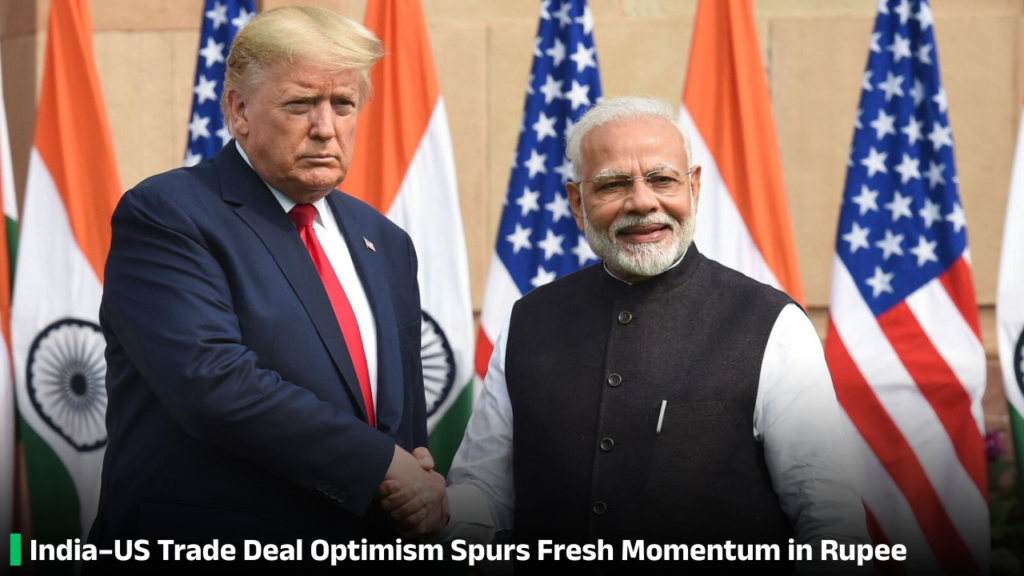
The deal was announced by US President Donald Trump on social media after a call with Prime Minister Narendra Modi. It effectively ends a punitive tariff system that had seen duties on Indian exports rise to 50%, the highest in Asia.
By removing penalties related to India’s purchases of Russian energy and reducing reciprocal tariffs to 18%, the agreement is expected to encourage a return of foreign capital, as the rupee has been under continuous pressure due to record equity outflows in 2025.
“The trade deal removes a significant portion of policy and tariff uncertainty that has been weighing on Indian assets. This paves the way for a quick rebound in the rupee and equities through improved sentiment and foreign flows,” said Mark Whelan, head of investments at Lucerne Asset Management in Singapore.
The rupee was the worst-performing Asian currency in 2025, falling nearly 5% over the year and more than 2% in the last month.
MUFG Bank said in a note, “The recent weakness in the INR is due to lower portfolio inflows. The trade deal offers India positive benefits in the medium term through improved export competitiveness and reduced tariff uncertainty.”
The trade deal is expected to break the self-reinforcing cycle of hedging that has been weighing on the rupee. Importers had increased their dollar purchases in the forward market to hedge against prolonged currency weakness, while exporters were hesitant to hedge, creating a demand-supply imbalance.
A senior treasury official at a private sector bank said that removing the burden of tariffs could change the “psychological issue” that had developed for the currency.
He added that expectations of further rupee depreciation are likely to diminish, which should reduce the imbalance between importer and exporter hedging, helping to initiate a virtuous cycle that will support the rupee. Along with a moderation in corporate hedging, speculative activity against the rupee is also expected to decline.