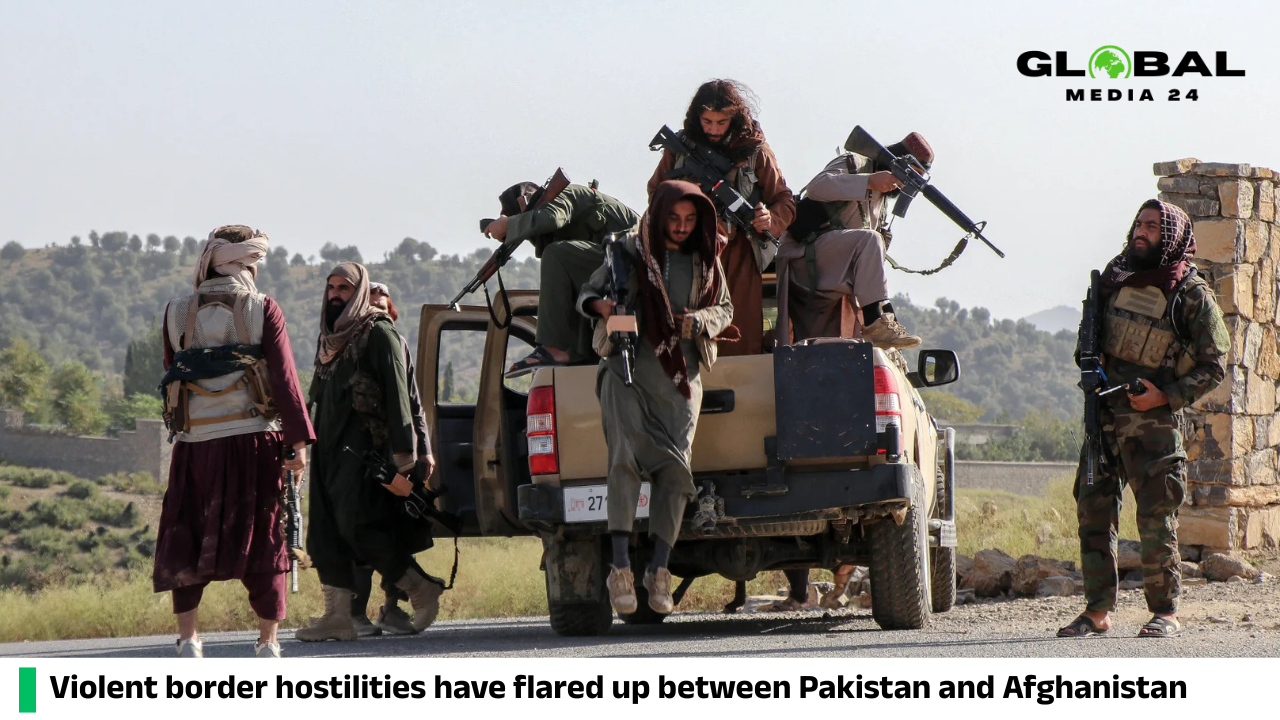
Border fighting has flared up once more between Pakistan and Taliban forces in Afghanistan, with both sides blaming each other for violating the fragile ceasefire.
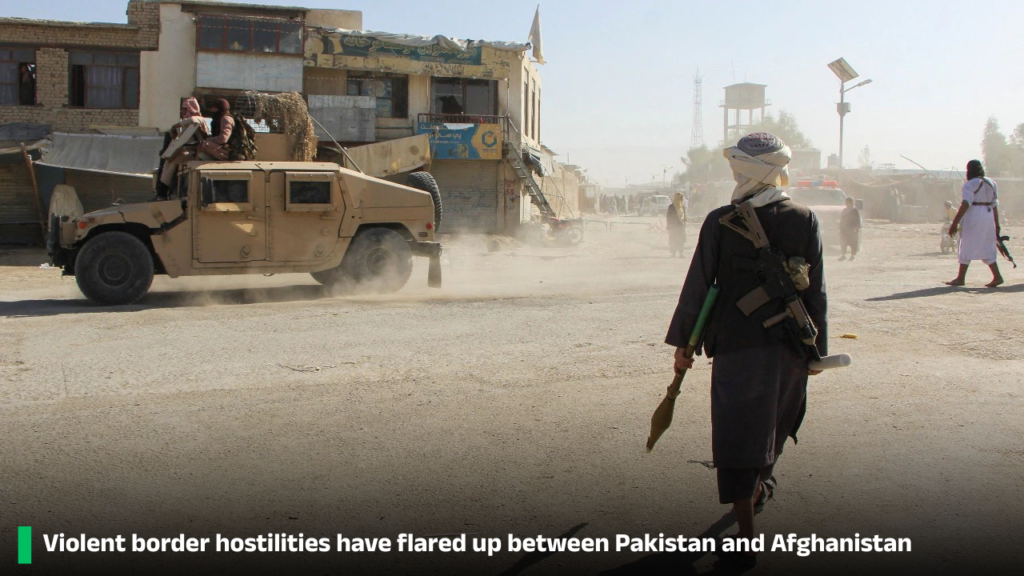
People fled the Afghan city of Spin Boldak overnight, which lies on the 1,600-mile (2,600 km) border between the two countries.
A medical worker in the nearby city of Kandahar said four bodies had been brought to a local hospital. Four others were injured. Three people were reported injured in Pakistan.
There have been sporadic clashes between the two countries in recent months, while Afghanistan’s Taliban government has also accused Pakistan of carrying out airstrikes inside its territory.
Both sides confirmed they exchanged fire overnight but blamed each other for the fighting, which lasted four hours. Pakistani Prime Minister Shehbaz Sharif’s spokesperson, Musharraf Zaidi, accused the Taliban of “unprovoked firing.”
The statement further said, “Our forces have responded immediately, appropriately, and effectively. Pakistan is on high alert and committed to ensuring its territorial integrity and the safety of its citizens.”
Meanwhile, a Taliban spokesperson said Pakistan had “once again initiated attacks” and that they were “forced to respond.” Residents on the Afghan side of the border reported that the firing began around 10:30 pm Friday (18:00 GMT).
Footage from the area shows a large number of Afghans fleeing on foot and in vehicles. Ali Mohammad Hakmal, head of the information department in Kandahar, said the Pakistani army had attacked with “light and heavy artillery,” and that mortars had been fired at civilian homes.
The latest clashes come less than two months after both sides agreed to a ceasefire brokered by Qatar and Turkey.
That agreement ended more than a week of fighting that killed dozens of people—the worst clashes between Pakistan and the Taliban since the Taliban returned to power in 2021—although tensions remain high.
The government in Islamabad has long accused the ruling Taliban in Afghanistan of harboring armed groups that carry out attacks in Pakistan.
The Taliban government denies the allegation and accuses Pakistan of shifting blame for its “own security failures.”
The Pakistan Taliban has carried out at least 600 attacks on Pakistani forces in the past year, according to the Armed Conflict Location and Event Data Project.
Delegations from both sides met in Saudi Arabia last week for a fourth round of talks on a comprehensive peace settlement, but no agreement was reached. Sources familiar with the talks said both sides had agreed to continue the ceasefire.
Relations under strain:
Ties between Afghanistan and Pakistan have soured since the Taliban came to power in 2021, largely due to Islamabad’s accusations that Kabul is harboring several armed groups, including the Pakistan Taliban (TTP).
The TTP has waged a sustained campaign against the Pakistani state since 2007 and is often described as the ideological twin of the Afghan Taliban. Most recently, on Wednesday, the TTP claimed responsibility for a roadside bomb blast in Pakistan near the Afghan border that killed three Pakistani police officers.
Pakistan also accuses Afghanistan of harboring the Balochistan Liberation Army and a local ISIL/ISIS affiliate known as ISKP—even though ISKP is an enemy of the Afghan Taliban.
The Afghan Taliban denies the allegations, saying it cannot be held responsible for security inside Pakistan, and has accused Islamabad of deliberately spreading disinformation and provoking border tensions.
Deadly fighting broke out on their shared border for a week in October, when Islamabad demanded that Kabul rein in militants who were stepping up attacks in Pakistan. About 70 people were killed and hundreds wounded on both sides of the border before Afghan and Pakistani officials signed a ceasefire agreement in the Qatari capital of Doha on October 19.
However, that agreement has since been followed by a series of unsuccessful talks aimed at solidifying a long-term ceasefire, hosted by Qatar, Turkey, and Saudi Arabia. The latest round of talks, held in Saudi Arabia last weekend, failed to achieve any breakthrough, although both sides agreed to continue their fragile ceasefire.
Despite the ceasefire, Kabul has accused its neighbor of repeatedly carrying out airstrikes in Afghanistan’s eastern provinces in recent weeks. Nine children and a woman were reportedly killed in a Pakistani military attack on a house in Afghanistan’s southeastern Khost province in late November. Pakistan denied carrying out any such attack.