

The plan aims to boost Pentagon spending by over 40% within a year—the most significant rise since World War II—as Washington works to continue military operations and replenish exhausted weapons reserves.
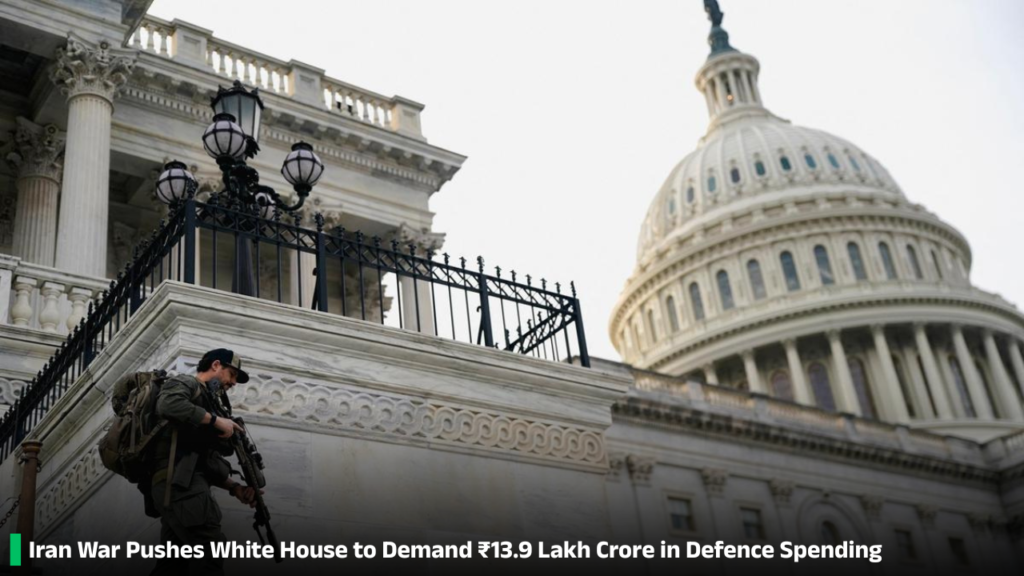
On Friday, US President Donald Trump urged lawmakers to approve a massive $1.5 trillion defense budget for 2027, as the United States faces escalating costs stemming from its conflict with Iran and expanding global security responsibilities.
This proposal would boost the Pentagon’s spending by more than 40 percent in a single year—the largest increase since World War II—as Washington seeks to sustain military operations and replenish depleted weapons stockpiles.
This request underscores the mounting financial strain of a conflict now in its fifth week, and it ignites a political battle within Congress over how to fund such a massive surge in military spending.
Citing closed-door congressional briefings, US media outlets have reported that the war with Iran could cost up to $2 billion per day—a figure that highlights the sheer scale of the financial burden, even before accounting for long-term reconstruction and resupply costs.
To partially offset this increase, the administration is proposing cuts of approximately $73 billion—roughly 10 percent—to non-defense spending; these cuts target a range of domestic programs, including environmental initiatives, housing assistance, and education funding.
White House officials assert that these cuts will eliminate what they deem “wasteful spending” and shift certain responsibilities back to state and local governments.
Trump has framed the defense buildup in urgent terms, arguing that military investment must take precedence during wartime, even if it comes at the expense of federal social programs.
“It is not possible for us to take care of daycare, Medicaid, and Medicare,” Trump recently stated at a private event, adding that such responsibilities could be managed at the state level, while Washington focuses on “military protection.”
‘Reckless War’
The budget outline—released in summary form—is not legally binding; however, it serves as a statement of the administration’s priorities as Congress begins drafting legislation related to spending. Lawmakers possess the authority to rewrite or reject the plan.
Trump is urging Congress to approve a substantial portion of the defense budget—exceeding $1.1 trillion—through the standard appropriations process, while simultaneously seeking to pass an additional $350 billion using a party-line mechanism that would bypass Democratic support.
Republican leaders have shown openness to this approach, particularly as they push for increased spending on defense and immigration enforcement. However, the plan may face opposition from within Trump’s own party, where some lawmakers are concerned about the growing federal deficit.
The United States already faces an annual deficit approaching $2 trillion, with a total national debt exceeding $39 trillion; the situation leaves limited fiscal space for new spending and raises concerns about further widening the gap.
Lawmakers from both parties have also expressed apprehension regarding the scale of the proposed military buildup, particularly given the limited information the administration has provided regarding the path of the conflict with Iran.
Similar skepticism surrounds the proposed domestic spending cuts, many of which Congress has already rejected. Spending bills passed earlier this year largely preserved funding for programs that the White House had sought to reduce or eliminate.
Beyond defense, the administration is also proposing increased funding for federal law enforcement, including an allocation of over $40 billion for the Department of Justice.
Nevertheless, if fully implemented, this plan could add trillions of dollars to the federal debt over the coming decade. This highlights the difficulties lawmakers are facing in light of wartime demands and long-term financial pressures.
In a statement posted on social media, House Democrats said, “The American people want healthcare, not war. The Trump administration has spent billions on a reckless war with Iran yet has refused to increase funding for healthcare.” “This is unconscionable, and House Democrats will not stand for it.”