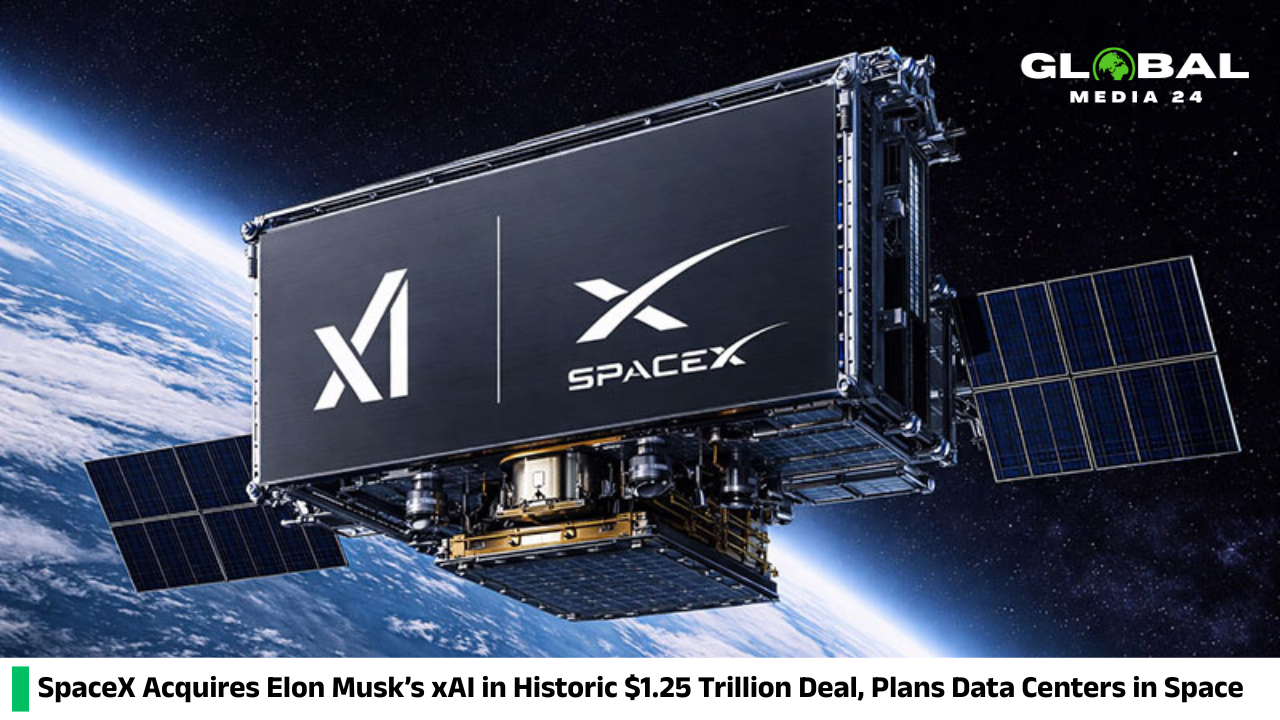
Elon Musk’s SpaceX has acquired the AI startup xAI in a landmark $1.25 trillion transaction, signaling Musk’s ambitious move toward developing data centers in space.
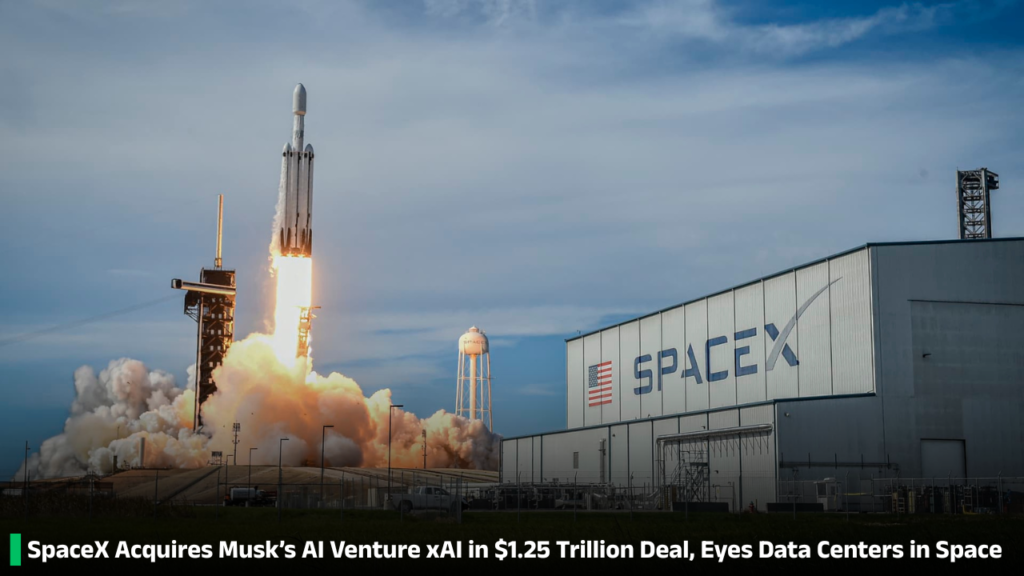
SpaceX has acquired Elon Musk’s artificial intelligence startup xAI, making it the world’s most valuable private company, the spaceflight firm said on Monday.
In a note posted on SpaceX’s website, Musk said the primary goal of the merger is to build data centers in space. He stated that current AI systems rely on large data centers on Earth, which require enormous amounts of power and cooling.
Musk said that the global power demand for AI cannot be met by terrestrial data centers in the future without causing harm to communities and the environment. His comments come as xAI faces criticism over the impact of its data center in Memphis, Tennessee.
He wrote, “Current advancements in AI rely on massive terrestrial data centers that require enormous amounts of power and cooling. The global power demand for AI cannot be met by terrestrial solutions, even in the near future, without causing significant harm to communities and the environment.”
“In the long term, space-based AI is the only way forward. To utilize even a millionth of the energy from our sun would require a million times more energy than our civilization currently uses.”
Elon Musk added, with a playful emoji, “Therefore, the only logical solution is to move these resource-intensive endeavors to a place with abundant power and space. I mean, it’s called ‘space’ for a reason.”
According to Bloomberg News, the deal values the combined SpaceX-xAI company at approximately $1.25 trillion. SpaceX is reportedly preparing for a stock market listing in early June, although Musk did not comment on whether the merger would affect those plans.
This deal brings together two companies facing different pressures. According to Bloomberg, xAI is spending approximately $1 billion per month, while SpaceX earns most of its revenue from launching and operating its Starlink satellites.
Musk has said that space-based data centers will require a large and continuous flow of satellites, ensuring long-term demand for SpaceX launches. US regulations also require satellites to be deorbited every five years.
Despite the merger, the two companies have different short-term goals. SpaceX is focused on proving that its Starship rocket can carry humans to the moon and Mars. Meanwhile, xAI is racing to compete with larger AI firms like Google and OpenAI.
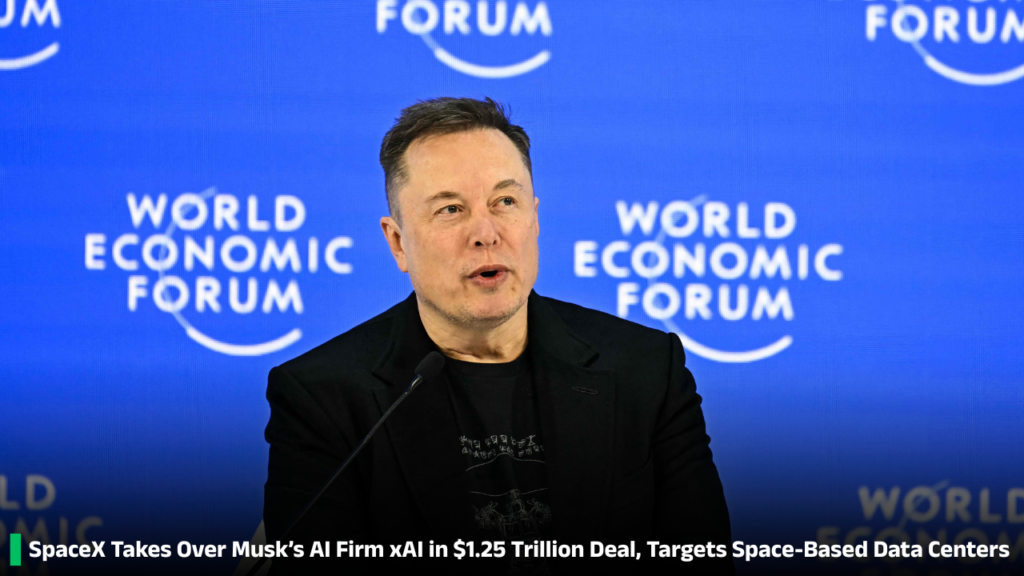
Earlier this year, xAI acquired X, the social media platform formerly known as Twitter. Musk also runs Tesla, Neuralink, and The Boring Company, and both Tesla and SpaceX have invested billions of dollars in xAI.
Why say “acquire” when Elon Musk owns both?
Legally, SpaceX and xAI were separate entities with their own distinct pools of outside investors, assets, and liabilities. By officially acquiring xAI, SpaceX now owns its intellectual property (such as the Grok chatbot) and its workforce, potentially creating a “vertically integrated innovation engine” under one roof.